


Views: 0 Author: Site Editor Publish Time: 2026-10-14 Origin: Site


Expanding gas injection in XPS foam production introduces physical blowing agents into molten polymer, creating a cellular structure that dictates board morphology, strength, and insulation. Consistent structure requires high-pressure metering, supercritical conditioning, and continuous flow control to ensure gas fully dissolves into the melt before expansion at the die. This guide explores gas injection principles, components like metering pumps, operational parameters, and troubleshooting methods for maintaining optimal foam density in XPS extrusion equipment.
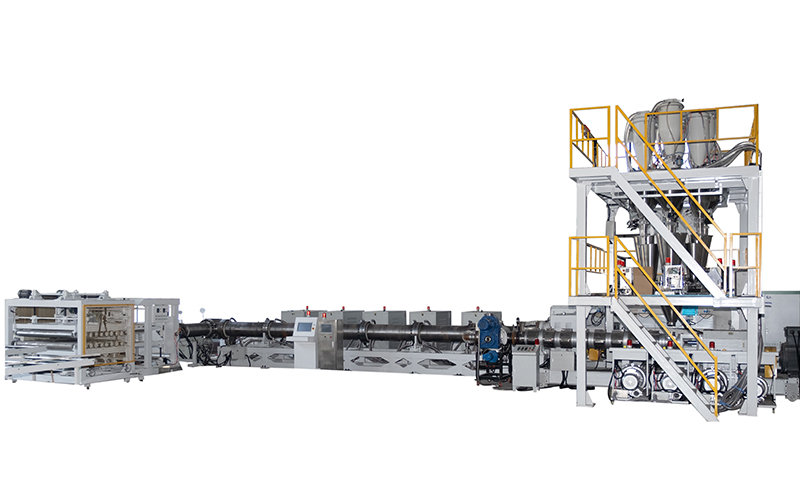
Supercritical State Necessity: Conditioning blowing agents into a supercritical state enhances solubility, allowing uniform dispersion and preventing premature separation.
Precise Metering Control: High-precision metering pumps maintain constant gas mass flow, preventing density fluctuations and ensuring consistent thickness.
Strategic Injection Positioning: Injection port location must align with melt pressure and temperature profiles to guarantee optimal gas dissolution.
Static Mixing Integration: A static mixer shears the polymer-gas mixture, ensuring a homogenous solution before the die.
Dynamic Pressure Regulation: Balancing injection pressure against barrel pressure is critical; inadequate pressure causes blockages, while excessive pressure disrupts stability.
Troubleshooting Foam Defects: Understanding causes of density variations, pressure fluctuations, and port blockages allows targeted mechanical adjustments.
Expanding gas injection introduces a physical blowing agent into molten polystyrene inside an extruder barrel. XPS extrusion relies on the dynamic phase transition of this agent. Injected under high pressure, gas dissolves into the polymer matrix, creating a single-phase solution. Upon exiting, sudden ambient pressure drops cause dissolved gas to nucleate and expand, forming closed cells.
Effectiveness depends on gas solubility and the injection system's capability to deliver gas without pulsation. Uneven gas dispersion yields structural inconsistencies like large voids, uneven density profiles, and compromised thermal resistance. Modern systems utilize fluid handling technology to guarantee exact gas mass integrates continuously into the melt stream.
The distinction between CO2 gas injection and chemical blowing lies in gas generation mechanisms. Chemical blowing agents are solid additives introduced into the extruder feed throat alongside polymer resin. In heated barrel zones, the chemical agent undergoes thermal decomposition, releasing expansion gases. This simpler process offers less control over gas volume and leaves residual solid byproducts within the foam matrix, affecting physical properties.
CO2 gas injection introduces external gas directly into the melt stream at a pressurized state. This requires a sophisticated CO2 metering system handling fluids at high pressures and conditioning them into a supercritical state. Physical injection allows instantaneous blowing agent concentration adjustment, granting real-time control over foam density and cell size. While equipment complexity is higher, superior control makes bulk CO2 the preferred industrial method.
Determining the injection point location on the extruder barrel is a critical engineering decision. The injection port must sit in a zone where polystyrene has completely transitioned to a homogenous, viscous melt. Gas injected too early escapes back through the feed throat. Injected too late, insufficient residence time remains to ensure gas dissolves completely.
Typically, the injection point sits in a decompression zone within the primary extruder. In tandem configurations, this is towards the latter half of the first extruder. The screw design momentarily reduces melt pressure, creating an environment for introducing high-pressure gas safely without overwhelming forward conveying action. Following this zone, the screw profile transitions back into a high-shear mixing configuration to thoroughly disperse the injected gas. Precise placement relies on rheological calculations to ensure optimal gas solubility conditions.
An industrial gas injection system is an assembly of high-pressure fluid handling components, control electronics, and mixing hardware. Primary infrastructure includes gas supply storage, thermal conditioning units, precision metering pumps, pressure regulation valves, the injection port assembly, and static mixing elements. Synergy ensures the physical blowing agent transforms into a controllable fluid integrating with molten polystyrene.
The metering pump is the mechanical heart of the gas injection system, delivering blowing agent at an exact mass flow rate. Injection rate variations cause board density fluctuations, dimensional instability, and inconsistent cell structure. Advanced metering pumps utilize positive displacement mechanisms, employing diaphragm or piston configurations engineered for high-pressure fluid dynamics. These pumps capture a specific volume of blowing agent and force it into the injection line, ensuring flow independent of downstream pressure. Downstream flow meters measure actual mass delivered, feeding data back to the central controller. If deviation is detected, the controller modulates the pump's operational speed. Rigorous adjustment eliminates pulsation, ensuring uniform cell nucleation.
Carbon dioxide is a preferred physical blowing agent in modern XPS production due to its non-flammable nature and expansion characteristics. To maximize effectiveness, CO2 must be thermally and mechanically conditioned into a supercritical state before entering the polymer melt. The supercritical state is achieved when fluid is subjected to pressures and temperatures exceeding its critical point, exhibiting properties of liquid and gas.
In this supercritical state, CO2 possesses liquid density but maintains gas diffusivity and low viscosity. Liquid-like density allows the metering pump to deliver significant mass consistently, while gas-like diffusivity enables CO2 to dissolve into viscous polystyrene melt efficiently. Supercritical CO2 acts as a powerful plasticizer, reducing overall polymer melt viscosity. If CO2 remains subcritical, solubility is compromised, leading to phase separation.
While the extruder screw, driven by a robust ZLYJ gearbox, provides dynamic mixing to blend molten polystyrene and blowing agent, a static mixer is essential for achieving homogeneity required for premium XPS foam. Positioned downstream of the main extruder, the static mixer is a stationary component containing internal baffles or geometric elements.
As the polymer-gas solution flows through the static mixer, internal geometry forces the melt stream to divide, recombine, fold, and shear continuously. This intensive mixing process eliminates residual concentration gradients or thermal variations within the melt. The static mixer ensures every microscopic region of the polymer matrix contains an identical proportion of dissolved blowing agent. When melt exits the die and pressure drops, nucleation and expansion occur uniformly.
Final XPS board quality is dictated by thermodynamic and mechanical parameters during the injection phase. Operators monitor and adjust these variables to maintain the delicate balance required for optimal cell morphology. Critical parameters include regulation of injection pressure relative to melt pressure, blowing agent temperature, and consistency of mass flow rate.
Injection pressure is an influential parameter governing blowing agent solubility and the subsequent nucleation process. The rule is that blowing agent pressure at the injection port must exceed localized pressure of polymer melt. If injection pressure is too low, gas cannot overcome melt pressure, leading to flow stagnation, inconsistent gas delivery, and backflow of molten polymer into injection hardware.
Conversely, while high injection pressure ensures gas dissolution, excessive pressure leads to erratic melt behavior. Gas forced into melt aggressively causes localized shear heating and disrupts laminar flow profile within the barrel. The pressure profile from injection point to die must be carefully managed. The polymer-gas solution remains under pressure higher than solubility pressure until it reaches die lips. This leads to large, irregular cells, ruptured cell walls, and a degraded structural matrix.
Metering accuracy is the foundation of process stability in XPS extrusion. The proportion of blowing agent relative to polymer resin mass dictates expansion extent and final foam density.
If metering accuracy fluctuates, gas concentration within the melt stream varies longitudinally. These variations manifest as density waves along the extruded board. A momentary drop in injection rate produces a dense, rigid section of foam, while a sudden surge results in a highly expanded, overly soft section suffering cellular collapse during the curing phase. These systems continuously measure true gas mass injected, compensating for temperature or supply pressure changes. Maintaining linear mass flow, the metering system ensures continuous XPS boards with uniform thickness.
Choosing the method for introducing blowing agent depends on production goals, available infrastructure, and desired foam properties. Direct liquid/gas injection and supercritical fluid injection are physical processes, chemical masterbatch blowing relies on thermal decomposition.
Table 1: Comparison of Injection Methods
Feature | Direct Gas/Liquid Injection | Supercritical Fluid (SCF) Injection | Chemical Masterbatch Blowing |
|---|---|---|---|
Agent State at Injection | High-pressure gas or compressed liquid | Conditioned supercritical fluid | Solid pellet (decomposes in melt) |
Equipment Complexity | High (requires specialized pumps and ports) | Very High (requires thermal conditioning and precision metering) | Low (utilizes standard gravimetric feeders) |
Control Precision | High (dynamic flow adjustments) | Excellent (superior mass flow stability) | Moderate (dependent on thermal profile and feed rate) |
Solubility in Melt | Good | Superior (acts as a potent plasticizer) | N/A (gas generated internally) |
Typical Foam Density Achieved | Medium to Low | Ultra-Low to Low | High to Medium |
Residue in Final Product | None | None | Yes (solid byproducts from chemical reaction) |
Best Use Case | Standard XPS board production | Premium, low-density, high-insulation XPS boards | Low-volume specialty applications or lines without gas infrastructure |
For a modern operation, transitioning towards physical injection methodologies utilizing supercritical fluids provides control necessary to produce lightweight, insulative boards. Lines operating without gas infrastructure may opt for a CO2-free foamed XPS line relying on alternative physical or chemical methods, though the industry standard favors precision of supercritical CO2 for optimal structural results.
Operational anomalies occur during continuous extrusion. Troubleshooting gas injection involves analyzing physical symptoms in extruded foam and correlating them with mechanical or thermodynamic deviations within injection infrastructure.
When extruded XPS board exhibits a density significantly higher than targeted, an insufficient gas volume successfully nucleated and expanded the polymer. The primary root cause is typically a deficit in blowing agent mass flow reaching the die.
Alternatively, the issue may reside within the thermodynamic profile of the extruder. If melt temperature is too low, polystyrene viscosity increases significantly, hindering solubility and uniform gas dispersion. Correct injected gas volume may not fully dissolve, leading to poor expansion exiting the die. Furthermore, excessively low die temperature freezes foam external skin rapidly, restricting internal cell expansion.
Unstable injection pressure is a severe operational issue disrupting longitudinal consistency of the foam board. Continuous pressure fluctuation suggests the system is struggling to maintain steady flow against dynamic backpressure of polymer melt. This instability is frequently caused by irregular melting behavior within the extruder barrel. Polymer resin not melting consistently creates pressure surges and drops within the decompression zone where the injection port is located.
Another common cause of pressure fluctuation is the presence of gas pockets or cavitation within liquid supply lines prior to the metering pump. Blowing agent not properly conditioned or supply pressure dropping below fluid vapor pressure can flash into gas before entering the pump head. The pump loses prime and delivers variable fluid volumes.
A blocked injection port immediately halts blowing agent introduction, leading to a complete loss of foaming action and potentially causing severe damage to injection hardware. Port blockages occur when delicate pressure balance between injected fluid and molten polymer is inverted. If injection pressure drops momentarily below localized melt pressure in the barrel, highly viscous polystyrene is forced backward into the injection nozzle and check valve assembly.
Once molten polymer enters cooler injection hardware, it rapidly solidifies, creating an impenetrable plug. This pressure inversion can be triggered by sudden metering pump failure, abrupt interruption in gas supply, or unexpected surge in extruder barrel pressure due to a change in resin feed rate. If blockage occurs, the extrusion line must typically be halted, and the injection assembly carefully disassembled and cleaned of solidified polymer.
Table 2: Gas Injection Troubleshooting
Issue | Root Cause | Action |
|---|---|---|
Foam Density Higher Than Expected | Insufficient gas mass flow | Verify metering pump calibration and clear supply line restrictions. |
Foam Density Higher Than Expected | Low melt temperature hindering solubility | Increase barrel temperatures in the mixing zones to optimize viscosity. |
Injection Pressure Fluctuation | Erratic melt pressure in the barrel | Adjust screw speed and check for inconsistent resin feeding. |
Injection Pressure Fluctuation | Cavitation in the metering pump head | Ensure fluid conditioning maintains the agent in the correct state; bleed supply lines. |
Injection Port Blocked | Melt pressure exceeds injection pressure | Inspect and replace the injection port check valve; verify continuous gas supply pressure. |
Large Voids in Foam | Premature gas expansion in the barrel | Increase cooling zone pressure and verify static mixer effectiveness to ensure gas remains in solution. |
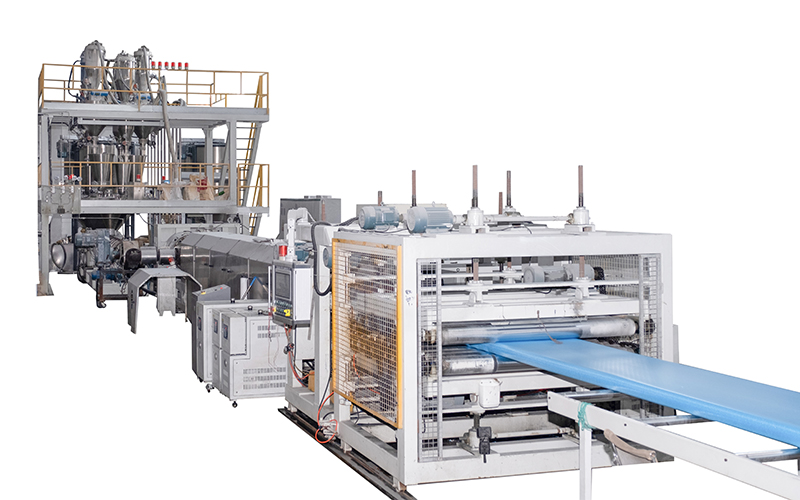
Mastering expanding gas injection is fundamental to achieving structural excellence and superior thermal performance in extruded polystyrene foam. Successful integration of a physical blowing agent into a high-viscosity polymer melt relies on an intricate balance of fluid conditioning, unwavering metering accuracy, and engineered mixing mechanics.
For manufacturing facilities looking to optimize cellular extrusion capabilities or transition to environmentally sustainable blowing agents, upgrading injection infrastructure is a critical step. Implementing advanced closed-loop control systems further stabilizes the process against dynamic pressure fluctuations within the barrel.
Mingxinzhi integrates these advanced fluid handling principles directly into the architecture of our extrusion systems, ensuring every parameter is tightly controlled from gas conditioning to final expansion. To explore how comprehensive engineering solutions can enhance production consistency, review the configurations available in our XPS foam production line.
A: Carbon dioxide (CO2) is the primary physical blowing agent utilized in contemporary XPS production. It is heavily favored due to its non-flammable properties, excellent expansion capabilities, and zero ozone depletion potential.
A: Yes, existing extrusion lines can be retrofitted with supercritical CO2 injection systems. However, this upgrade requires significant engineering modifications. The primary extruder must be modified to include a specially designed decompression zone and a high-pressure injection port.
A: Ambient temperature fluctuations significantly impact the density and vapor pressure of stored blowing agent prior to conditioning. Industrial gas injection systems rely on active thermal conditioning units to stabilize fluid temperature long before it reaches the precision metering pump.
A: While the rotating extruder screw provides dispersive mixing, it can leave microscopic concentration gradients within highly viscous polymer-gas solution. A static mixer, placed downstream of the dynamic screw, utilizes stationary geometric elements to continuously divide and fold the melt stream. Complete homogeneity is critical for uniform cell nucleation.
A: Large voids or blowholes are typically the result of premature phase separation, where dissolved gas comes out of solution and begins to expand while inside the extruder barrel or die, rather than after exiting the die lips. This premature expansion is usually caused by inadequate pressure control—specifically, if melt pressure drops below gas solubility pressure at the current melt temperature.


