


Views: 0 Author: Site Editor Publish Time: 2026-11-01 Origin: Site


Targeted Production Strategy: Understanding why cabinet makers demand specific board qualities helps extrusion line investors configure their machinery for maximum market appeal and higher profit margins.
Distinct Extrusion Route: While standard equipment focuses on free foam and Celuka, coextrusion is another route of similar extrusion processes that requires specialized multi-manifold die setups.
Optimized Skin Quality: Precise control over the PVC foam board skin layer allows manufacturers to produce high-gloss, scratch-resistant surfaces directly from the die, eliminating secondary finishing.
Thickness Calibration: Adjusting the PVC foam board crust thickness enables production lines to cater to diverse applications, from lightweight cabinet backs to heavy-duty load-bearing shelves.
Enhanced Yield and Consistency: Advanced PVC coextrusion die design ensures batch color consistency and dimensional stability, reducing scrap rates and improving overall production yield.
Sustainable Manufacturing: Coextruded boards offer 100% recyclability, allowing production facilities to reprocess edge trim and startup scrap into the core layer, drastically lowering raw material costs.
The manufacturing of premium cabinetry substrates has evolved significantly over the last decade, driven primarily by the stringent demand for materials that combine luxury aesthetics with long-term structural durability. For investors, plant managers, and operators of plastic extrusion machinery, deeply understanding these end-user demands is critical for configuring production lines that yield high-margin products. Cabinet makers require materials that can reliably withstand high-humidity environments, vigorously resist daily physical wear, and maintain flawless finishes. Traditional substrates like medium-density fiberboard (MDF) and plywood consistently fall short due to their inherent moisture absorption, and standard single-layer PVC boards often lack the necessary surface hardness for premium applications.
This market gap presents a highly lucrative opportunity for proactive extrusion manufacturers. By adopting advanced coextrusion technology, production facilities can manufacture a superior composite panel that addresses every failure point of traditional wood products. This engineered solution sandwiches a lightweight, microcellular core between two solid, ultra-rigid PVC outer skins. For the production line buyer, mastering this multi-layer manufacturing process means delivering a premium product that commands significantly higher prices in the competitive building materials market. The resulting boards offer the structural integrity and high-gloss aesthetics demanded by elite cabinet makers, ensuring a steady, predictable stream of B2B orders. This comprehensive article explores the technical machine configurations required to produce these sophisticated boards and outlines the seven key reasons why cabinet makers overwhelmingly prefer them, providing a strategic roadmap for extrusion manufacturers to optimize their product offerings and maximize their return on investment.
The absolute foundation of a successful multi-layer board lies in the precision of the PVC coextrusion die design. Unlike standard single-screw or twin-screw extrusion setups that push a homogenous melt through a simple profile, coextrusion requires a highly sophisticated multi-manifold die system, often utilizing a coat-hanger geometry to distribute the melt evenly. This complex equipment must seamlessly merge distinct polymer streams—typically a highly expanded foam core and a solid, unfoamed outer skin—while maintaining strict laminar flow. If the melt streams mix prematurely or experience uneven pressure distribution within the die channels, the resulting board will suffer from severe surface defects, inconsistent thickness across the web, or fatal delamination at the core-skin interface.
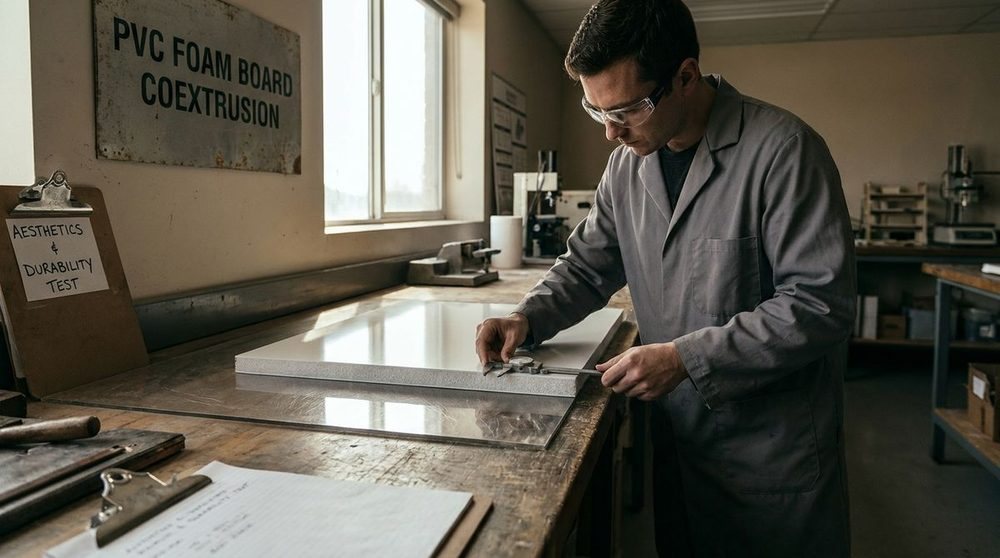
For production line buyers, investing in high-quality, precision-machined die heads is paramount for operational success. The die must meticulously accommodate drastically different rheological properties. The core formulation contains chemical blowing agents (such as azodicarbonamide) that expand violently upon exiting the die lips, while the skin formulation is specifically designed for rapid cooling and solidification. Precision machining of the internal flow channels ensures that the solid PVC layer is distributed evenly across the rapidly expanding core, preventing bare spots, drag lines, or uneven gloss levels.
It is vital to contextualize this advanced technology within the broader extrusion landscape. For manufacturers currently exploring equipment options, a standard PVC foam board production line typically focuses on Celuka and free foam technologies. When evaluating your machinery investments, remember that pvc foam board coextrusion is another route of similar extrusion processes. It utilizes the exact same fundamental principles of polymer melting, shaping, and cooling, but requires additional extruders (co-extruders) feeding into a specialized, complex die. This strategic modularity allows manufacturers to significantly diversify their product portfolio and target premium market segments without abandoning their core extrusion competencies.
Table 1: Comparison of Core Extrusion Technologies for Cabinet Boards
Extrusion Technology | Skin Characteristics | Core Structure | Production Cost & Equipment Complexity |
|---|---|---|---|
Free Foam | No distinct rigid skin; presents a matte, porous, and relatively soft surface finish. | Uniform cellular structure distributed evenly throughout the entire board cross-section. | Lowest equipment cost; simpler die design; lower formulation costs suitable for basic operations. |
Celuka | Hardened, smooth outer skin formed by rapid inward cooling against a calibration tool. | Denser near the surface, transitioning to a slightly less uniform cellular inner core. | Moderate equipment cost; requires specialized calibration tooling and precise temperature control zones. |
Co-extrusion | Ultra-rigid, high-gloss, non-porous solid PVC skin applied via a multi-manifold die. | Highly uniform, lightweight microcellular core, completely and seamlessly encapsulated by the skin. | Highest equipment cost; requires multiple extruders and complex dies; delivers the highest long-term ROI. |
The defining physical feature that unequivocally separates premium coextruded panels from standard alternatives is the PVC foam board skin layer. In the multi-stage manufacturing process, this layer is extruded as a solid, unfoamed PVC melt that entirely encapsulates the foaming core before it enters the calibration unit. The thickness of this critical skin layer typically ranges from 0.05 mm to 0.2 mm, depending heavily on the specific die configuration, the volumetric output of the co-extruder, and the speed of the haul-off unit. Controlling this layer is absolutely critical for production yield, as it dictates the board's final surface properties, scratch resistance, and ultimate commercial appeal to cabinet makers.
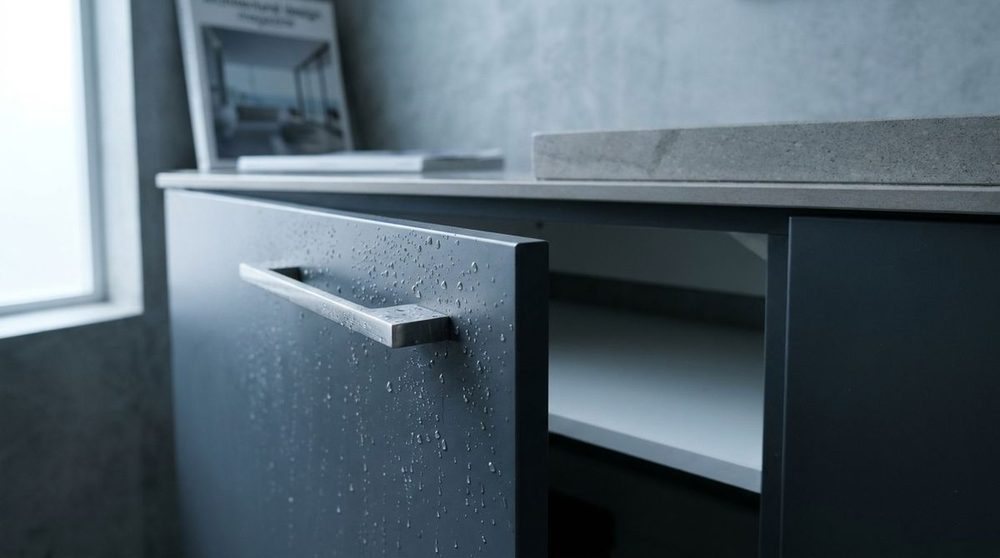
By meticulously optimizing the formulation of the skin layer—incorporating advanced UV stabilizers, impact modifiers (like acrylic resins), and premium titanium dioxide for exceptional whiteness—manufacturers can produce boards that meet the exact, unforgiving specifications of high-end furniture brands. This precise control over the outer surface translates directly into three compelling commercial reasons why cabinet makers prefer coextruded boards.
For high-volume cabinet makers, relentlessly reducing labor costs is a primary operational objective. Coextruded boards perfectly mimic high-end lacquered finishes directly from the machine. Because the PVC foam board skin layer cools rapidly against high-precision polished calibration plates under vacuum, it forms an exceptionally smooth, high-gloss surface. The surface tension achieved is ideal for direct use or immediate laminating without chemical primers. Cabinet manufacturers no longer have to invest countless hours in multi-stage sanding to smooth out imperfections, applying primer to seal porous surfaces, or spraying expensive polyurethane lacquers. For the extrusion line operator, delivering a product that completely eliminates these intensive post-processing steps means offering a high-value substrate that commands a significant premium in the B2B market, accelerating sales cycles and drastically improving profit margins.
Standard free-foam PVC sheets are notoriously soft, making them highly susceptible to denting during factory assembly, transport, or daily use in high-traffic residential spaces like bustling kitchens. The rigid outer skin produced by the coextruded process acts as a permanent, protective armor. Because this skin is highly compacted and solid—unlike the cellular structure beneath it—it distributes localized impact forces across a much wider area. This physical defense mechanism minimizes the risk of deep scratches, structural dents, and unsightly edge chipping. For the production facility, ensuring a robust skin layer means significantly fewer products are rejected by clients for transit damage, leading to higher long-term satisfaction rates and repeat orders from demanding cabinet making clients.
Large-scale cabinet manufacturers undertaking commercial projects require absolute color uniformity across hundreds of panels to ensure matching kitchen sets and seamless modular installations. Achieving this with painted MDF is notoriously difficult due to inevitable variations in paint batches, atmospheric conditions during drying, and application techniques over time. Coextrusion elegantly solves this inherent problem by embedding the pigment directly into the solid PVC foam board skin layer during the high-temperature extrusion process. By utilizing highly accurate automated gravimetric dosing systems on the co-extruder, production lines can maintain exact color formulations hour after hour, day after day. This guarantees strict batch color consistency, allowing cabinet makers to mix and match panels from different shipments without any visual discrepancies, making coextruded boards the undisputed preferred choice for massive residential developments.
While the skin layer provides the aesthetic finish and surface hardness, the overall structural rigidity and load-bearing capacity of the panel are heavily influenced by the PVC foam board crust thickness. In extrusion terminology, the "crust" refers to the densified outer region of the board, which encompasses the solid coextruded skin and the immediately adjacent, highly compacted foam cells that aggressively collapse against the cold calibration unit. By dynamically adjusting the cooling rates in the water-jacketed calibration plates and monitoring the melt pressure within the die, line operators can precisely manipulate this crust thickness, typically ranging from 1.0 mm to 3.0 mm.
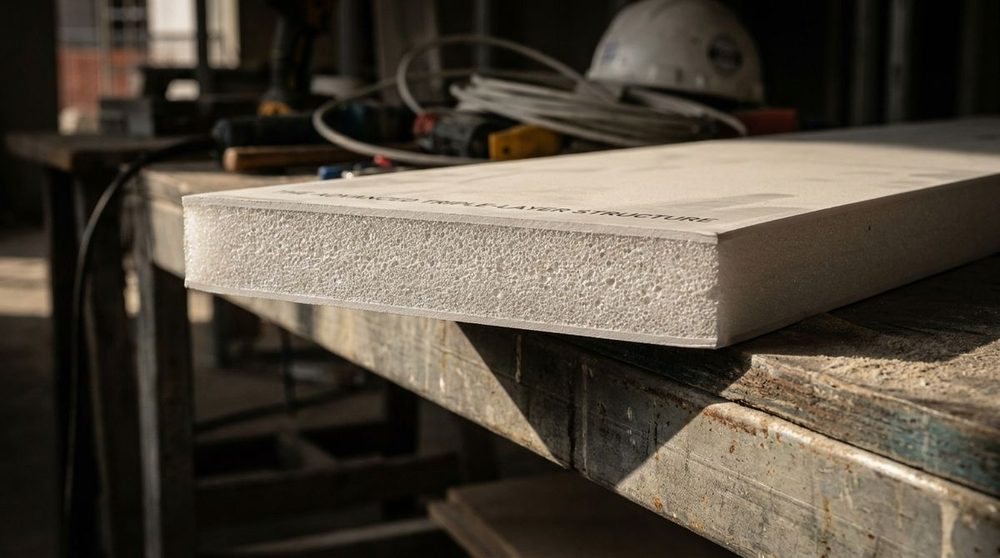
Thicker crusts significantly increase the flexural modulus (stiffness) of the board, making it highly suitable for heavy load-bearing applications like pantry shelves, while thinner crusts intelligently reduce overall weight and lower raw material costs for lighter applications. Mastering the precise control of the PVC foam board crust thickness allows forward-thinking extrusion manufacturers to offer a versatile, tiered product catalog that caters to vastly different structural requirements within the global cabinetry industry.
Table 2: Crust Thickness and Cabinetry Application Correspondence
Crust Thickness Range | Key Board Characteristics | Ideal Cabinetry Applications |
|---|---|---|
0.5 mm – 1.0 mm | Lightweight, moderate stiffness, highly cost-effective material usage profile. | Cabinet back panels, lightweight drawer bottoms, and non-load-bearing decorative fascias. |
1.0 mm – 2.0 mm | Balanced weight-to-strength ratio, excellent screw retention properties for hinges. | Standard cabinet doors, side panels, vertical partitions, and bathroom vanity carcasses. |
2.0 mm – 3.0 mm | Maximum structural rigidity, extreme load-bearing capacity, superior impact resistance. | Horizontal shelving, heavy pantry bases, commercial cabinetry, and robust outdoor kitchen frames. |
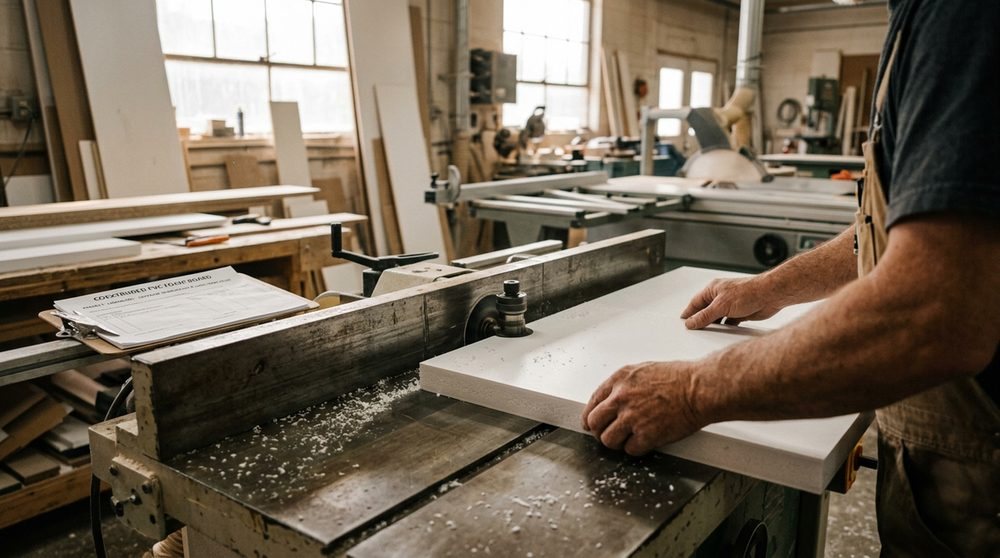
Modern cabinet makers heavily rely on high-speed, automated CNC routers and edge-banding machines to process panels with millimeter precision. Materials with inconsistent density or uneven internal stresses will inevitably warp, twist, or change dimensions immediately after being cut, leading to misaligned joints and wasted material. A tightly controlled PVC foam board crust thickness ensures uniform internal stress distribution across the entire panel. The rigid outer crusts act exactly like the flanges of an I-beam, securely locking the inner core in place. This exceptional dimensional stability guarantees that the boards flawlessly retain their processing accuracy. When cabinet makers cut coextruded panels, the router bits engage the dense crust cleanly, allowing for aggressive feed rates. The edges remain perfectly straight and true, allowing for flawless assembly, tight tolerances, and highly efficient automated manufacturing.
Traditional cabinet substrates, such as MDF and laminated plywood, are fundamentally vulnerable to moisture, invariably leading to irreversible swelling, warping, and catastrophic edge delamination. Coextruded boards completely eliminate these fundamental failure points at the molecular level. The dense crust and solid skin form an impenetrable, non-porous physical shield. Because the polymer chains of polyvinyl chloride are hydrophobic by nature, the material is completely impervious to water penetration. Even if a cabinet is subjected to standing water under a leaking sink or intense, daily steam in a poorly ventilated bathroom, the core remains perfectly dry and structurally sound. For extrusion manufacturers, heavily promoting this inherent waterproofing allows cabinet makers to confidently offer lucrative lifetime warranties against water damage, securing a massive competitive edge over competitors still relying on antiquated wood composites.
For buyers and operators of expensive plastic extrusion machinery, the ultimate goal is maximizing Return on Investment (ROI) while minimizing daily operational headaches. Producing coextruded boards undeniably requires a higher initial capital expenditure for the specialized die heads and the necessary co-extruders, but the operational efficiencies and the premium market positioning offer substantial, long-term financial rewards. By continuously optimizing production parameters, manufacturers drastically minimize scrap rates, reduce raw material costs through smart formulation engineering, and operate safely at high line speeds. The final two compelling reasons cabinet makers relentlessly demand these boards highlight the tremendous long-term value generated by this advanced manufacturing process, proving its overwhelming worth to the production facility.
Trapped moisture in cabinetry does not just threaten structural integrity; it also invites severe biological hazards like mold, mildew, and toxic black fungi, which rapidly compromise indoor air quality and pose severe health risks. Natural wood also remains extremely vulnerable to destructive wood-boring pests, such as termites, which can easily decimate an entire installation in months. The purely synthetic composition of coextruded panels provides absolute, permanent immunity to these biological threats. Because the board contains absolutely no cellulose or organic fibers, it offers zero nutritional value to fungi or insects. It will never rot, decay, or support mold growth, even in damp, unventilated spaces. By producing a sterile, highly hygienic substrate, extrusion lines supply a critical, code-compliant material for medical cabinetry, commercial food-storage pantries, and residential kitchens.
Environmental sustainability is rapidly becoming a strict, non-negotiable prerequisite for large-scale construction bids and commercial furniture contracts. Traditional laminated MDF or plywood panels are notoriously difficult to recycle due to the toxic glues and mixed materials used in their construction, almost always ending up in local landfills. Conversely, coextruded PVC boards are 100% recyclable thermoplastic products. From the perspective of the production line operator, this represents a massive operational and financial advantage. Using dedicated granulators and pulverizers, edge trim, startup scrap, and off-spec boards can be ground down to a fine powder and fed directly back into the core layer extruder. Facilities utilizing this method routinely report up to a 15-20% reduction in raw material costs. Because the core is completely encapsulated by a fresh, virgin PVC foam board skin layer, using recycled material in the core does not compromise visual appearance or surface performance. This closed-loop manufacturing process significantly lowers costs while allowing cabinet makers to aggressively market their furniture as eco-friendly.
Transitioning to the production of coextruded panels offers a highly lucrative and sustainable pathway for operators and investors of plastic extrusion machinery. By comprehensively mastering the intricate technicalities of PVC coextrusion die design and precisely controlling both the PVC foam board skin layer and crust thickness, manufacturers can reliably produce a premium substrate perfectly aligning with the rigorous demands of the global cabinetry market. The seven reasons outlined in this article—ranging from flawless surface finishes and unparalleled dimensional stability to absolute waterproofing and closed-loop recyclability—demonstrate precisely why elite cabinet makers are increasingly abandoning traditional wood composites in favor of engineered polymers. While standard equipment configurations remain viable for basic applications, recognizing that pvc foam board coextrusion is another route of similar extrusion processes allows forward-thinking manufacturers to significantly diversify their capabilities and capture premium market share. Ultimately, investing in this advanced multi-layer technology enables extrusion facilities to command higher profit margins, drastically reduce internal material waste, and secure long-term, high-volume partnerships with furniture brands seeking the highest quality materials available.
A: Standard production lines typically utilize a single main extruder to process the formulation and form the entire monolithic board. Coextrusion, however, requires at least one additional extruder (the co-extruder) dedicated exclusively to processing the solid skin formulation. Both extruders feed into a highly specialized multi-manifold PVC coextrusion die design, which merges the melt streams just before they exit the die lips. This requires significantly more sophisticated temperature zoning and pressure control systems to maintain strict laminar flow and prevent melt fracture or delamination.
A: Yes, this is one of the primary financial and operational advantages of the coextrusion process for manufacturers. Production facilities can process recycled PVC regrind, edge trim, and startup scrap directly into the core layer formulation. Because the core is completely encapsulated by a virgin PVC foam board skin layer, the recycled content is completely hidden from view, and the board flawlessly maintains a high-gloss exterior that meets premium market standards without revealing its recycled interior.
A: The crust thickness is primarily controlled by the cooling dynamics within the vacuum calibration unit and the formulation of the polymer melt. Faster, more aggressive cooling immediately after the board exits the die drastically increases the thickness of the densified outer layer. Additionally, adjusting the mechanical haul-off speed and the specific temperature zones of the water-cooled calibration plates allows machine operators to fine-tune the PVC foam board crust thickness to meet specific customer structural requirements.
A: Standard free-foam boards have a uniform, relatively soft cellular structure that can sometimes tear, compress, or fray during high-speed CNC routing. Coextruded boards possess a highly rigid outer skin and a stable, densified crust. This engineered structure acts like a physical clamp on the inner core, providing exceptional dimensional stability and ensuring that CNC routers produce clean, crisp cuts without chipping the edges, which vastly improves the cabinet maker's overall fabrication efficiency.
A: Permanent adhesion is achieved entirely thermally and molecularly within the PVC coextrusion die design. Because both the skin formulation and the core formulation are based on PVC polymers, they possess excellent chemical compatibility. When the two melt streams are brought together under high pressure and intense heat inside the die manifold, the polymer chains interlock and fuse, creating a seamless, monolithic bond that will not delaminate under normal environmental conditions or physical stress.


