


Views: 0 Author: Site Editor Publish Time: 2026-10-16 Origin: Site


A PS foam wall panel and wall decoration production line is a highly integrated extrusion system engineered for the high-efficiency manufacturing of architectural profiles and interior decorative materials. By utilizing polystyrene as the foundational polymer and employing advanced physical or chemical foaming techniques, this equipment is capable of processing continuous, lightweight, yet structurally robust products. Manufacturers operating these advanced systems can efficiently deliver a broad array of decorative interior building components, including wide interior wall panels, durable skirting boards, and intricate decorative mouldings. This comprehensive guide serves as an authoritative resource on the PS foam profile extrusion line, covering its versatile production capabilities, detailing product specifications, evaluating the distinctions among various foaming processes, and comparing PS against alternative materials such as PVC and WPC. It also provides essential guidance on configuring the Mingxinzhi (MXZ) production line for optimal wallboard output, ensuring plant managers and investors possess the critical knowledge required to maximize product quality and overall operational efficiency in the highly competitive decorative materials market.
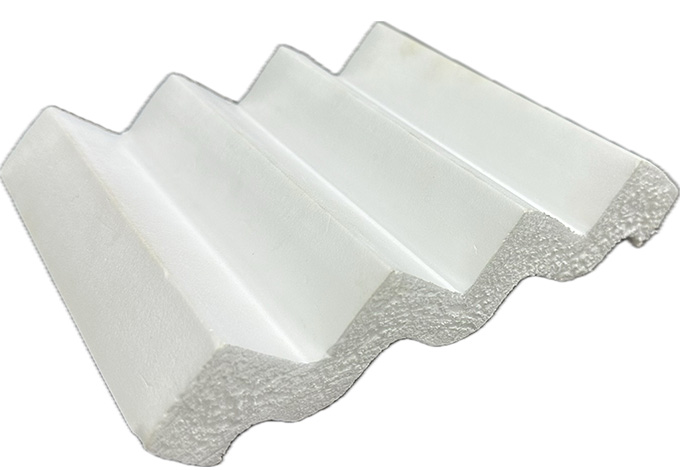
Versatile Production Capacity: A single line can extrude a diverse array of items ranging from wide wall panels to narrow skirting boards.
Advanced Foaming Technology: The integration of physical and chemical foaming ensures optimized density, structural integrity, and superior surface quality.
Superior Material Properties: Polystyrene foam offers excellent moisture resistance, lightweight handling, and outstanding dimensional stability for interior decoration.
Flexible Extrusion Configuration: The MXZ line can be precisely tuned to achieve required thicknesses and widths using interchangeable dies and downstream calibration.
Efficient Surface Finishing: Inline hot stamping and lamination techniques deliver high-end aesthetic finishes seamlessly synchronized with extrusion speed.
Competitive Market Advantage: PS foam profiles provide a highly cost-effective, environmentally friendly alternative to traditional timber and competing polymer composites.
A PS foam wall panel is a specialized interior decorative building material extruded from polystyrene resin that has undergone a controlled cellular expansion process. Polystyrene, a versatile thermoplastic, is processed in a high-temperature extrusion environment where it is infused with specialized blowing agents. These agents initiate a foaming reaction, creating a microcellular core structure that significantly reduces the overall weight of the panel while maintaining remarkable rigidity and mechanical strength.
The resulting foam board features a smooth, uniform surface ideal for aesthetic finishing. Its closed-cell foam matrix core inherently resists moisture absorption, making it highly suitable for high-humidity environments like residential bathrooms, commercial kitchens, and basements. Unlike traditional wood products, PS foam does not warp, rot, or harbor mold.
The lightweight nature of PS foam wall panels reduces transportation and installation costs. Installers benefit from its ease of cutting and handling, which accelerates project timelines. The manufacturing process allows for precise control over the panel's Thickness, ensuring absolute uniformity across long production runs. When processed through a high-quality PS foam line profile production line, the raw polymer is transformed into a premium architectural element that faithfully replicates the visual appeal of natural materials while delivering the engineered reliability of a modern thermoplastic composite.
The versatility of an MXZ extrusion system ensures manufacturers are not restricted to a single product category. By executing rapid changeovers of dies and calibrators, the machinery transitions smoothly among several decorative profiles, maximizing return on investment and operational flexibility.
Interior wall panels are a primary output, serving as expansive decorative surfaces. They are typically produced in wider formats to cover substantial wall areas efficiently. The extrusion line ensures these wide-span products maintain consistent structural integrity without warping. Wall panels extruded from polystyrene offer exceptional thermal and acoustic insulation properties due to their microcellular foam core. During extrusion, operators can seamlessly apply surface finishes through inline lamination or hot stamping, allowing panels to mimic textures of natural wood grain or marble. The ability of the equipment to maintain strict tolerances in continuous linear stability is what makes these wall panels a dominant product in the interior decoration market.
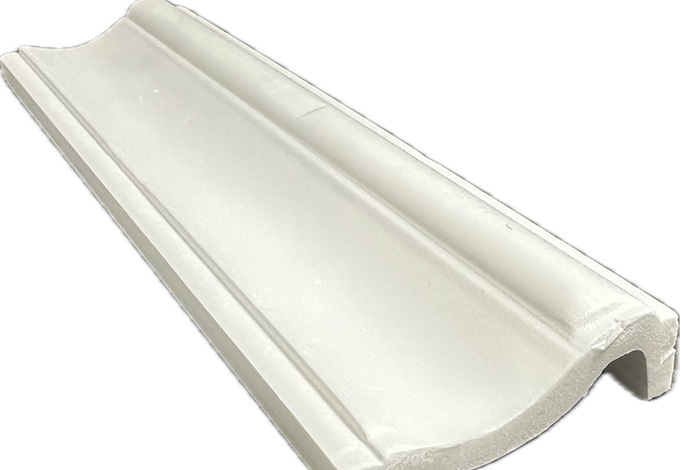
Skirting boards, or baseboards, are crucial architectural profiles concealing the joint between the interior wall and floor, providing a seamless transition while protecting the lower wall surface. Producing skirting boards demands equipment capable of extruding high-density, impact-resistant profiles with finely detailed cross-sections. The MXZ line excels in producing these narrower, dense profiles. The process requires precise temperature control and cooling calibration to ensure the skirting board retains a sharp edge and flawless surface finish. PS foam skirting boards offer distinct advantages over medium-density fiberboard (MDF) or natural wood, primarily their complete immunity to water damage. The inline finishing systems applied typically involve high-speed foil stamping, which securely bonds a decorative layer to the substrate.
Beyond expansive panels and robust skirting, the line manufactures an assortment of decorative mouldings and ceiling profiles. These include crown mouldings, architraves, and chair rails adding architectural character to interiors. Extrusion of these intricate products is a technically demanding application, as they feature complex, contoured shapes with delicate curves. The die design for decorative mouldings must be meticulously engineered to ensure polymer melt flows evenly through varying cross-sectional thicknesses. Polystyrene foam is highly prized for ceiling applications due to its exceedingly low weight, eliminating the need for heavy structural anchoring. For operations requiring distinct specialized outputs, exploring equipment like the PS microfoam line profile production line reveals how nuanced control over the foaming reaction produces mouldings with a remarkably smooth, paint-ready surface.
Understanding the specifications for each product category is essential for manufacturers optimizing production planning and market alignment. Dimensions, density, and applied finishes vary depending on the architectural function of the extruded profile. Wall panels generally require greater widths and specific thickness ranges to provide structural rigidity over large spans, whereas skirting boards demand higher impact resistance and specialized profiles. Mouldings are characterized by their intricate geometries and require strict dimensional tolerances to ensure seamless joints during installation. The following table provides a comprehensive overview of the typical specifications for these three primary product categories, highlighting the versatility of the extrusion equipment in accommodating diverse manufacturing requirements.
Table 1: Product Specifications Comparison
Product Category | Typical Width | Typical Thickness | Core Density Characteristic | Common Inline Finishes | Primary Application |
|---|---|---|---|---|---|
Interior Wall Panels | Wide formats (e.g., Board Width 600–1,500 mm) | Board Thickness 4–20 mm | Medium to Low Density | Film Lamination, Co-extrusion | Expansive wall coverings, feature walls |
Skirting Boards | Narrow formats | Moderate thickness | High Density | Hot Stamping, Painting | Floor-to-wall transitions, impact protection |
Decorative Mouldings | Variable intricate profiles | Variable thickness | Medium Density | Hot Stamping, Primer Coating | Ceiling transitions, framing, chair rails |
The structural and aesthetic characteristics of extruded decorative profiles are dictated by the specific foaming process utilized. Each technique influences cellular structure, surface hardness, and overall weight, making the foaming method selection a critical engineering decision. Free foaming involves allowing the polymer melt to expand freely immediately upon exiting the extrusion die. The expansion is unrestricted, which generally results in a uniform foam structure throughout the cross-section of the profile. However, this process typically yields a softer surface, making it less suitable for applications requiring high impact resistance, though it remains highly cost-effective for lightweight decorative elements where surface hardness is not the primary concern. The CO2 microfoam process represents an advanced approach, utilizing supercritical carbon dioxide injected directly into the polymer melt. This technique creates a vast number of microscopic, tightly packed gas cells within the polymer matrix. The result is a profile with exceptional strength-to-weight ratios and remarkably smooth surfaces that are highly receptive to high-end finishes. This process is favored in the production of premium architectural mouldings where precise detail and minimal weight are crucial. The Celuka process is distinguished by its use of a specially designed calibration die that rapidly cools the exterior of the profile while allowing the interior core to foam inward. This creates a solid, unfoamed outer skin that is extremely hard and smooth, encasing a lightweight foamed core. Profiles produced via the Celuka method boast superior rigidity, exceptional screw-holding strength, and excellent scratch resistance, making this technique ideal for high-traffic products like skirting boards and durable wall panels. A well-configured extrusion setup can be optimized to execute these various foaming methodologies effectively.
Table 2: Foaming Process Comparison
Foaming Process | Mechanism of Expansion | Surface Characteristic | Core Structure | Best Suited For |
|---|---|---|---|---|
Free Foaming | Unrestricted expansion post-die | Softer, slightly textured | Uniform cellular matrix | Lightweight ceiling decor, low-impact areas |
CO2 Microfoam | Physical injection of supercritical gas | Smooth, highly uniform | Extremely fine, dense microcells | Premium intricate mouldings, detailed profiles |
Celuka | Constrained expansion with rapid outer cooling | Hard, glossy solid skin | Foamed interior core | High-impact skirting, rigid interior wall panels |
In the highly competitive interior decorative materials sector, manufacturers frequently evaluate Polystyrene (PS), Polyvinyl Chloride (PVC), and Wood-Plastic Composites (WPC) for wall panel production. Each polymer matrix possesses distinct attributes dictating its suitability for specific architectural applications. PS foam is predominantly celebrated for its extraordinary lightweight properties and ease of processing. Polystyrene resin expands efficiently, resulting in decorative profiles that are remarkably easy to transport and install. The material demonstrates outstanding dimensional stability and complete resistance to moisture, preventing the warping and swelling associated with cellulose-based materials. While it may not possess the absolute raw tensile strength of heavier composites, its structural rigidity is more than adequate for vertical wall decoration and ceiling elements, offering an unbeatable cost-to-performance ratio. PVC, often utilized in a PVC foam board production line, is recognized for its inherent flame retardancy and high chemical resistance. It is slightly denser than PS foam and is frequently used in environments demanding stringent fire safety compliance. PVC boards are highly durable but can be more challenging to recycle compared to polystyrene, and they generally exhibit a higher specific gravity, increasing handling weight. WPC integrates thermoplastic polymers with wood flour or natural fibers, aiming to combine the aesthetic and tactile qualities of timber with the durability of plastics. WPC panels provide a very natural appearance; however, they are significantly heavier than pure PS or PVC foam products. Furthermore, because WPC contains natural organic fibers, it remains marginally susceptible to moisture absorption over extended periods if the polymeric encapsulation is compromised. For pure interior decoration where weight, ease of installation, and moisture resistance are paramount, PS foam consistently emerges as the most efficient and economically viable solution.
Table 3: PS vs. PVC vs. WPC Comparison
Material Type | Weight Characteristic | Moisture Resistance | Typical Application Environment | Economic Factor |
|---|---|---|---|---|
PS (Polystyrene) | Extremely Lightweight | Excellent (100% waterproof) | Interior living spaces, bathrooms, ceilings | Highly cost-effective, low shipping costs |
PVC (Polyvinyl Chloride) | Medium Weight | Excellent | Commercial interiors, high-humidity zones | Moderate cost, excellent fire retardancy |
WPC (Wood-Plastic) | Heavy | Good (Requires full encapsulation) | Premium interiors, areas desiring natural feel | Higher raw material and processing costs |
Configuring the Mingxinzhi extrusion line to maximize wallboard output involves orchestrating extruder parameters, die specifications, and downstream calibration equipment. The objective is to maintain a stable melt flow that conforms to the required dimensions while ensuring uniform cellular expansion across the profile's cross-section. The foundation of the configuration lies in the selection of the appropriate extruder model. To accommodate diverse production volumes and profile dimensions, MXZ lines are available in configurations ranging from Model 65–115. This specific designation refers to the screw diameter and geometry, engineered to impart optimal shear into the polystyrene resin. Operators must calibrate the screw speed and barrel heating zones to achieve a homogenous melt, which is critical for consistent foaming. Depending on the selected model, the equipment achieves a highly efficient Throughput of 20–100 kg/h. This processing capacity ensures manufacturers can sustain high-volume output, drastically reducing the cost per linear meter. A precise dosing system is imperative, ensuring blowing agents are introduced into the melt at exact ratios to control density accurately. The extrusion die and the vacuum calibration table dictate the final geometry. The machinery can be configured to produce an impressive Board Width of 600–1,500 mm. Achieving such widths without introducing edge warping requires advanced die head engineering, ensuring balanced polymer flow distribution. Furthermore, calibration equipment must be adjusted to govern the board's structural depth, tunable to a Board Thickness of 4–20 mm. The downstream haul-off speed must perfectly match the extrusion rate; deviation will result in fluctuations in Thickness or surface irregularities. The cooling tanks provide rapid temperature reduction to freeze the foam structure, locking in specified dimensions and ensuring a flawlessly flat surface ready for inline lamination.
The integration of an advanced PS foam wall panel and decoration production line fundamentally transforms a manufacturer's capability to deliver premium interior architectural components. Leveraging sophisticated extrusion technology and controlled foaming methodologies, these systems produce a vast array of high-quality products, from wide wall panels to intricately detailed mouldings and durable skirting boards. The inherent advantages of polystyrene—most notably its exceptional moisture resistance, incredibly lightweight handling, and superior dimensional stability—position these profiles as the optimal choice in modern interior design, effectively superseding traditional timber and heavier composite materials.
Understanding the critical specifications, mastering the nuances of various foaming processes such as Celuka and CO2 microfoaming, and properly configuring the MXZ extrusion equipment are essential competencies for maximizing production efficiency. Whether aiming to dominate the market with expansive panels or supply premium aesthetic mouldings, investors and plant managers must deploy equipment capable of maintaining strict tolerances and delivering flawless inline finishes. A well-engineered line not only reduces operational overhead but ensures consistent output quality that meets stringent architectural demands.
For manufacturers ready to scale their operations and explore the extensive capabilities of these advanced extrusion systems, Mingxinzhi provides the industry-leading technology required for success. We invite you to investigate the full potential of our specialized machinery by exploring the PS foam line profile production line. Additionally, reviewing our complete range of Products will help you identify the perfect technological solution to elevate your manufacturing portfolio and secure a dominant position in the decorative building materials market.
A: Yes, the system is designed for high versatility. By executing a controlled changeover of the extrusion die, calibration sleeves, and adjusting the cooling and haul-off mechanisms, a single machine seamlessly transitions from manufacturing expansive wall panels to extruding highly dense, narrow skirting boards. This flexibility maximizes equipment utilization and allows manufacturers to address diverse market demands with minimal capital expenditure.
A: PS profiles are highly receptive to sophisticated inline finishing techniques. The most common method is hot stamping, utilizing heat and pressure to transfer high-resolution decorative foils directly onto the profile's surface, simulating wood grains or marble. Additionally, continuous film lamination and direct printing processes can be integrated downstream, ensuring the product is completely finished and ready for packaging.
A: CO2 microfoaming injects supercritical carbon dioxide directly into the polymer melt, generating a denser, more uniform microcellular structure than traditional chemical blowing agents. The resulting profiles exhibit superior mechanical strength, lighter weight, and an exceptionally smooth surface finish. Furthermore, physical foaming leaves no chemical residue, making it a cleaner manufacturing process highly suitable for premium architectural mouldings.
A: Yes, a significant advantage of extruded polystyrene foam is its complete resistance to moisture. Unlike wood-based products or MDF which can swell, warp, or rot in damp conditions, the closed-cell polymer structure of PS foam renders it impervious to water absorption. This makes these wall panels and skirting boards ideal for humid environments such as bathrooms and basements.
A: Skirting boards require high impact resistance to withstand everyday wear near floor level, so they are extruded to a higher density than ceiling mouldings. While the density can be tuned via extrusion parameters, skirting profiles generally utilize a controlled foaming process creating a robust, semi-rigid structure. This ensures excellent screw-holding capability while remaining easier to handle than solid timber alternatives.


