


Views: 0 Author: Site Editor Publish Time: 2026-10-31 Origin: Site


A PS foam laminating machine seamlessly bonds plastic films or printable paper to extruded PS foam sheets, creating rigid and flat KT boards for advertising and exhibition purposes.
Precise control of laminating roller temperature is essential; insufficient heat leads to poor adhesion, while excessive heat collapses the CO2 physical foaming structure of the substrate.
Implementing dual-sided film tension control prevents the final board from curling, ensuring the laminated product remains flat for high-quality printing.
Accurate mechanical registration and edge trim mechanisms ensure that the film covers the foam core, minimizing waste and maintaining uniform edge quality.
The operational process window relies on finding the perfect balance between roller temperature, line speed, and nip pressure to achieve optimal peel strength.
Systematic troubleshooting procedures can rapidly resolve common production defects, such as trapped air bubbles, whitening, material curling, and layer delamination.
The core of a KT board is an extruded polystyrene (PS) foam sheet expanded using a CO2 physical foaming process, which creates a lightweight, closed-cell structure. However, the raw foam is inherently fragile and lacks the smooth surface required for high-resolution graphics. The PS foam laminating machine acts as the transformational stage in production. It solves material limitations by applying a layer of solid polystyrene film or printable paper to both sides of the foam core. This double-sided lamination process transforms the foam into a rigid, flat, and printable substrate. These finished KT boards are widely used across the advertising and exhibition industries for signage and displays.
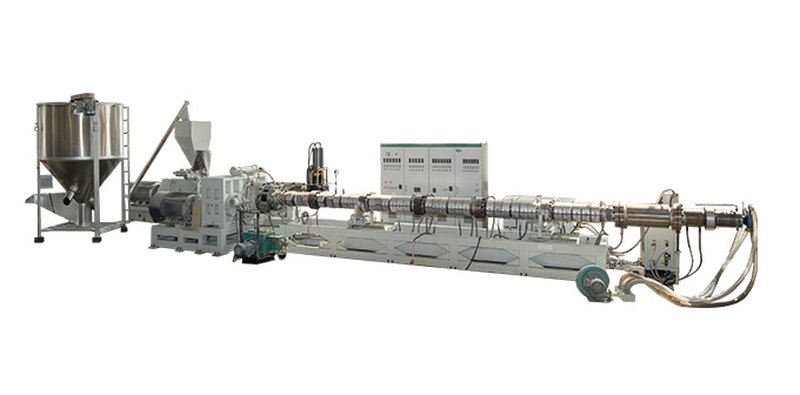
To achieve this, the extrusion and lamination process must be synchronized. The foam core is extruded, passed through cooling, and fed directly into the laminating station. The machine utilizes precise heat and mechanical pressure to bond the skins to the cellular core. Because the foam is predominantly composed of trapped gas cells generated during foaming, it remains highly sensitive to crushing forces and thermal degradation. The laminator must apply exactly enough pressure to ensure full surface contact between the film and foam without crushing the cellular structure.
Double-sided lamination is a structural necessity. Applying film to only one side induces severe internal stress, leading to extreme warping due to asymmetrical surface tension during cooling. By simultaneously applying films to both surfaces, the KT board production line balances these structural stresses. This balanced construction results in a perfectly flat board, an essential requirement for UV flatbed printers.
In continuous thermo-lamination, precise temperature regulation drives material adhesion. Laminating rollers must heat the thermoplastic film to its softening point, rendering the surface tacky enough to fuse with the PS foam core in the nip. The thermal window is narrow. If the temperature is too low, the film fails to bond, leading to immediate delamination. Conversely, if set too high, the thermal energy transfers through the film and melts the cellular foam structure. This causes the entire board to collapse, lose thickness, and develop a wavy surface.
To maintain this precise thermal environment, PS foam laminating machines utilize double-walled steel rollers equipped with internal fluid circulation. Thermal oil or pressurized water circulates through internal channels, transferring heat uniformly across the entire width of the cylinder. This fluid-based heating methodology is superior to electrical resistance heating elements, which frequently suffer from unpredictable hot spots. For premium lamination, surface temperature is regulated within a strict tolerance of ±1°C to ±1.5°C.
Furthermore, thermal dynamics shift depending on line speed and the micron thickness of the decorative film. Processing thicker films requires higher roller temperatures to ensure sufficient heat energy penetrates the bonding interface. Operating with thinner films requires lower temperatures to prevent material melting. Advanced machines feature multi-zone temperature controllers, granting operators the ability to fine-tune the heat profile to compensate for ambient cooling at the outer edges.
The cooling process immediately following the primary heating rollers is equally critical. Dedicated chilled water rollers rapidly extract residual heat from the laminated board. This thermal reduction locks the molecular structure of the plastic film and foam core together, halting the melting process and preventing post-lamination shrinkage. Rapid cooling stabilizes internal stresses, ensuring the board remains dimensionally stable as it travels down the PS foam floor covering production line.
Maintaining flawless film tension is the most critical requirement for producing a perfectly flat, warp-free KT board. The laminating machine features dual unwinding stations for the top and bottom films. As these master rolls unwind, their outer diameter decreases, naturally altering web tension if unmanaged.
If the film is applied to the foam core with excessive tension, the polymer chains stretch elastically during heated lamination. Once the board is cross-cut and tension is released, the stretched film aggressively shrinks back to its original length. This shrinking force causes the board to curl noticeably toward the side with higher applied tension. Conversely, if tension is too low, the loose film will sag, form severe wrinkles, and trap large air bubbles as it enters the nip.
To maintain consistent tension from a full roll down to the core, laminating machines employ closed-loop tension control systems. These systems utilize precision load cells on idler rollers to continuously measure actual web tension. This data stream is fed directly into the Programmable Logic Controller (PLC). The PLC calculates the exact required braking force and dynamically adjusts pneumatic or electromagnetic powder brakes on the unwinding shafts, perfectly matching the target tension profile.
To prevent warping, the running tension must remain identical on both the top and bottom films simultaneously. Any asymmetry results in a permanently bowed board, rendering it useless for exhibition displays. Machine operators must calibrate initial tension settings based on the tensile elasticity and thickness of the film batch. Additionally, mechanical dancer rollers are frequently integrated into the web path. These pivoting rollers absorb sudden tension spikes caused by roll out-of-roundness, ensuring a consistent feed into the lamination nip.
Maintaining physical registration and lateral alignment of the continuous film web relative to the extruded foam core relies heavily on robust mechanical tracking. The decorative film must completely cover the underlying foam substrate from edge to edge to create a uniform printable surface. Any exposed raw foam on the lateral edges represents a defect and a loss of usable commercial width.
As the master film unwinds at high speeds, minor variations in original roll winding or ambient vibrations can cause the web to wander laterally off its intended center path. To counteract this persistent physical challenge, PS foam laminating machines utilize advanced Edge Position Control (EPC) web guiding systems. These automated systems employ highly sensitive ultrasonic or infrared sensors positioned near the traveling film. These sensors continuously detect the physical location of the film's outer edge. If the web begins to drift, the sensor instantly signals an actuated web guide mechanism. This guiding unit pivots a specialized steering roller, steering the traveling film back to the exact center line before it enters the high-pressure laminating rollers.
Once securely laminated together, the continuous composite board inevitably possesses slightly rough or uneven lateral edges where the top film, bottom film, and internal foam core meet. Immediately following the heated lamination and cooling stages, the production line employs high-speed rotary edge trimmers. These precision circular slitting knives forcefully cut away the outermost margins of the continuous board, stripping away physical imperfections and leaving a clean, square, and sealed edge.
The trimmed waste material is typically suctioned away instantly via an industrial vacuum system and recycled back into the primary extrusion process, ensuring zero waste. The precision of this edge trimming operation directly dictates the usable width of the finished advertising board. If lateral film alignment wanders prior to lamination, the rotary edge trimmers might cut too deeply into the usable surface area, or leave unlaminated raw foam exposed. Maintaining proper mechanical registration guarantees maximum commercial yield.
The successful, profitable production of a high-quality KT board depends on navigating a surprisingly narrow operational process window. This window is defined by the continuous, interdependent relationship between three primary mechanical variables: roller temperature, overall line speed, and applied nip pressure.
Roller temperature determines the degree of thermal activation achieved by the plastic film. Overall line speed dictates the critical dwell time—the exact number of seconds the raw materials are physically subjected to intense heat and pressure while passing through the roller nip. Finally, nip pressure dictates the immense mechanical force driving the softened film down into the surface irregularities and closed cells of the foam core.
If line speed is increased to boost daily production volume, the effective dwell time inherently decreases. To physically compensate for this shortened exposure, roller temperature must be proportionally increased to successfully transfer the exact same amount of thermal energy into the traveling film. However, operators face an absolute upper limit to this temperature adjustment before the PS foam core crosses its thermal degradation threshold and undergoes catastrophic cellular collapse. Conversely, running the production line too slowly while maintaining a high roller temperature will also thoroughly melt the core, resulting in a thin, warped board.
Simultaneously, the nip pressure must be carefully calibrated to squeeze out entrapped atmospheric air and ensure complete surface wetting between the film and foam. Yet, this downward force must strictly remain below the compressive yield strength of the CO2 physically foamed core. Excessive mechanical pressure permanently crushes the cellular board, drastically reducing its final thickness and necessary rigidity. Machine operators must constantly monitor and adjust these interrelated parameters to maintain optimal peel strength—the engineering measure of how tenaciously the protective film adheres to the finished board under stress.
Table 1: Typical Process Window for PS Foam Lamination
Parameter | Low Range (Thinner Film/Slower Speed) | High Range (Thicker Film/Faster Speed) | Critical Impact on Final Product |
|---|---|---|---|
Roller Temperature | 110°C | 145°C | Adhesion peel strength, internal foam cell integrity |
Line Speed | 3 meters/min | 12 meters/min | Dwell time duration, total thermal energy transfer |
Nip Pressure | 0.2 MPa | 0.5 MPa | Surface wetting efficiency, prevention of air pockets |
Cooling Roller Temp | 15°C | 25°C | Immediate dimensional stability, long-term warp prevention |
Web Tension | 20 N/m | 50 N/m | Board flatness, prevention of post-lamination curling |
Even when utilizing advanced automated controls, the continuous extrusion and high-speed lamination of PS foam boards will encounter process deviations. Systematically diagnosing and rapidly resolving these defects is crucial for maintaining profitable yield rates and exceptional quality in the exhibition board manufacturing sector.
Trapped air bubbles represent a common aesthetic issue, appearing as raised blisters directly beneath the surface film. This defect usually indicates insufficient mechanical nip pressure, inadequate web tension allowing micro-wrinkles to form before the nip, or a roller temperature that is simply too low to fully soften and bond the film to the substrate.
Whitening, observed as a localized loss of surface gloss and color saturation on the film surface, is typically a definitive sign of excessive thermal stress. This degradation occurs when the heating roller temperature is set far too high or the overall line speed drops too low, causing the sensitive film polymer to chemically degrade, over-stretch, or partially melt during application.
Curling is almost exclusively related to poor mechanical tension management. If a cooled board consistently bows upward or downward upon exiting the machine, it means the film tension was unequal during the heated lamination phase. The board will always physically curl toward the specific side applied under higher tension, as that over-stretched film attempts to contract with much greater force during cooling.
Finally, delamination—where the surface film peels away effortlessly from the underlying foam core—is the single most severe structural defect, rendering the board completely unprintable and unsellable. This points directly to a fundamental failure in the thermal bonding process itself. It is usually caused by an excessively low operating temperature, insufficient nip dwell time, or severe dust contamination present on the raw foam surface prior to the lamination stage.
Table 2: Defect Troubleshooting Guide for PS Foam Laminating Machines
Defect Observed | Primary Process Cause | Secondary Contributing Cause | Recommended Corrective Action |
|---|---|---|---|
Air Bubbles / Blisters | Extremely low nip pressure | Low film tension causing web wrinkles | Substantially increase pneumatic pressure on nip rollers; increase brake torque on unwinding shaft. |
Surface Whitening | Excessive roller temperature | Line speed significantly too slow | Decrease fluid temperature setpoint in heating rollers; carefully increase line speed. |
Board Curling (Bowing) | Unequal top/bottom film tension | Asymmetrical top/bottom cooling rates | Recalibrate top and bottom tension load cells to perfectly match; verify uniform fluid flow. |
Delamination (Poor Adhesion) | Insufficient thermal energy transfer | Contaminated or dusty foam surface | Increase roller temperature or decrease line speed to maximize dwell time; check extruder cleanliness. |
Crushed Foam Core | Excessive mechanical nip pressure | Temperature severely exceeding foam melting point | Reduce downward nip pressure below the foam's physical yield strength; drastically lower all heating temperatures. |
The specialized PS foam laminating machine stands as the critical component in successfully transforming fragile extruded polystyrene foam into robust, exceptionally flat, and highly printable commercial KT boards. By comprehensively mastering the delicate interplay of laminating roller temperature, balanced dual-sided film tension, and precise mechanical web alignment, modern manufacturers consistently produce premium-grade advertising and exhibition boards. The nuanced thermo-lamination process demands rigorous, continuous control to securely bond the disparate materials without ever collapsing the delicate cellular structure generated by the CO2 physical foaming process. Ultimately, investing in a sophisticated machine fully equipped with closed-loop tension tracking systems, multi-zone fluid heating capabilities, and automated ultrasonic web guiding ensures maximum continuous material yield and lifelong dimensional stability. A thoroughly calibrated, meticulously monitored laminating process remains the essential foundation for reliably delivering flawless rigid substrates that successfully meet the increasingly rigorous demands of the global high-resolution digital printing industry.
A: Temperature control is vital because lamination relies on precise thermal activation to bond the plastic film to the foam core. If the fluid temperature in the rollers is too low, the film polymer won't reach its softening point, causing delamination. Conversely, if the temperature is too high, the intense heat will melt the delicate CO2 physically foamed core, destroying the board's calibrated thickness and rigidity. Multi-zone fluid-heated rollers maintain the precise thermal window required for perfect adhesion.
A: Curling is caused by unequal mechanical tension between the top and bottom films during the heated lamination phase. If one side is applied tighter than the other, that over-stretched film will contract with greater force as it cools, pulling the rigid board into a permanent bow. This defect is prevented by employing closed-loop tension control systems. These systems utilize continuous electronic load cells and magnetic powder brakes on both unwinding stations, ensuring applied tension is identical on both sides.
A: PS foam laminating machines rely on mechanical Edge Position Control (EPC) systems. Advanced ultrasonic or infrared sensors detect the physical edge of the unwinding film web. These sensors signal heavy-duty pneumatic guides to instantly steer the web laterally left or right. This automated correction guarantees the film completely covers the wide extruded foam core before entering the high-pressure nip rollers, entirely preventing exposed raw foam edges and maximizing the factory's usable commercial width.
A: Line speed and roller temperature share an inversely proportional relationship to maintain constant thermal energy transfer. If an operator increases the line speed to boost production, the materials spend less time (dwell time) in contact with the heated rollers. To compensate and achieve the same level of adhesion, the operator must proportionally increase the roller temperature. Conversely, slowing down the production line requires an immediate temperature reduction to prevent the excess heat from melting the sensitive foam core.
A: Following lamination and rapid cooling stages, the production line utilizes high-speed rotary edge trimmers. These specialized circular slitting knives precisely cut away the rough, uneven lateral margins where the top film, bottom film, and internal foam core meet. This trimming process removes overhanging excess film and guarantees the final advertising board possesses clean, square, and uniform edges. The trimmed waste material is suctioned away by an industrial vacuum for immediate recycling, ensuring factory efficiency.


