


Views: 0 Author: Site Editor Publish Time: 2026-11-02 Origin: Site


In the industrial manufacturing of polystyrene (PS) foam boards, achieving impeccable dimensional stability and a uniform cellular structure is a paramount objective. During the extrusion process, the polymer melt undergoes significant physical changes, and internal stresses are inevitably locked within the matrix. To relieve these manufacturing stresses and promote the optimal expansion of the blowing agents, a highly specialized controlled heat treatment is required. This sophisticated thermal management process occurs within the industrial secondary foaming oven, a critical piece of equipment in any modern PS foam board production line. Unlike basic heating chambers, an industrial curing oven is engineered with exact thermodynamic principles to gently raise the temperature of the extruded boards, allowing the residual blowing gas to expand the cells further without rupturing the delicate polymer walls. The operational efficiency of this equipment directly dictates the final quality, thickness, and flatness of the foam products. Operators must understand the intricate relationship between thermal dynamics, residence time, and polymer rheology to maximize the output quality. Through precise thermal calibration, the system effectively mitigates the risk of post-production warping, shrinkage, or structural failure, ensuring that every manufactured board meets the stringent dimensional tolerances demanded by the construction and packaging industries. This level of precision is absolutely necessary for producing materials that will be subjected to varying environmental conditions over their lifespan. Modern construction techniques rely heavily on the predictability of the insulation materials used, making the curing phase a non-negotiable step in the manufacturing pipeline. Without this advanced thermal treatment, the inherent stresses within the polymer would cause catastrophic failures in the field, leading to compromised structural integrity and significant financial losses for both the manufacturer and the end-user.
Industrial secondary foaming equipment utilizes multi-zone independent temperature control paired with forced convection circulation to ensure absolutely uniform thermal distribution across the entire board surface.
Achieving a PID temperature control accuracy of ±1.5°C is critical to prevent localized overheating and maintain the structural integrity of the polystyrene foam.
The integration of CFD-optimized air ducts ensuring uniform wind speed and pressure across the entire width guarantees that convective heat transfer occurs seamlessly without damaging the delicate cellular walls.
Extended residence times within the curing chamber allow internal stresses to dissipate gradually, drastically improving the dimensional stability of the final product.
Carefully mapped temperature profiles prevent sudden thermal shocks, guiding the extruded material through a gentle and highly controlled expansion phase.
Continuous monitoring and real-time adjustments within the thermal zones safeguard the polymer matrix against unwanted shrinkage and density variations.
The primary function of the curing chamber within a polystyrene foam production line is to facilitate the secondary expansion of the extruded material while simultaneously relieving locked-in manufacturing stresses. When the PS foam exits the primary extruder and cooling calibration units, it contains residual blowing agents that have not fully expanded. If the board is allowed to cool rapidly to room temperature without undergoing a controlled thermal treatment, the sudden drop in temperature causes the polymer matrix to rigidify while internal gas pressures remain unstable. This imbalance inevitably leads to severe post-extrusion shrinkage, unpredictable warping, and a significant loss of dimensional stability over time. The industrial curing system intervenes by providing a highly regulated environment where the board is gently reheated to its softening point.
During this critical phase, the thermal energy transferred to the board increases the mobility of the polymer chains. This enhanced mobility allows the locked-in stresses, which were generated by the high shear forces of the extrusion process, to relax naturally. Simultaneously, the elevated temperature increases the vapor pressure of the residual blowing agents trapped within the closed-cell structure. Because the polymer walls are maintained in a softened, pliable state, this increased internal pressure causes the cells to expand further. This secondary expansion process significantly increases the overall thickness of the board and reduces its overall density, thereby optimizing the material yield and improving its thermal insulation properties.
Furthermore, the continuous and highly regulated thermal environment ensures that the expansion occurs uniformly across the entire width and length of the board. Without this specialized equipment, manufacturers would experience inconsistent densities and severe surface irregularities. The equipment acts as the ultimate quality control checkpoint, transforming a stressed, partially expanded extrusion into a stable, fully matured foam board ready for final trimming, stacking, and packaging. The efficiency of this process is heavily reliant on the advanced engineering of the heating elements, the aerodynamic design of the circulation fans, and the precision of the digital controllers orchestrating the entire thermodynamic symphony.
To fully grasp the importance of this phase, one must consider the microstructural changes occurring within the material. The blowing agent, typically a combination of volatile organic compounds or environmentally friendly alternatives, exerts an outward force against the cell walls. The oven's heat softens these walls just enough to yield to this pressure without rupturing. This delicate balancing act requires an ambient environment that is completely devoid of sudden temperature spikes or cold drafts. The insulated panels of the curing chamber are therefore constructed with high-density materials to prevent any thermal leakage, ensuring that the internal atmosphere remains hermetically sealed and perfectly calibrated throughout the production run. This level of environmental control is what separates high-grade industrial insulation from inferior products.
Moreover, the physical layout of the curing chamber is designed to accommodate the continuous flow of the production line. As the endless sheet of foam enters the chamber, it is supported by a series of precisely aligned rollers that prevent sagging or mechanical distortion. The synchronization between the upstream haul-off speed and the rotational speed of these internal rollers must be exact. Any slight discrepancy in speed could introduce new mechanical stresses, completely negating the benefits of the thermal relaxation process. Therefore, modern systems employ sophisticated variable frequency drives (VFDs) and encoder feedback loops to maintain flawless synchronization, ensuring that the board glides through the thermal environment with zero mechanical resistance.
To achieve flawless secondary expansion without compromising the structural integrity of the polystyrene matrix, the curing chamber is divided into multiple independent thermal sections. This architectural design is essential because the polymer requires different levels of thermal energy at different stages of the curing process. The implementation of multi-zone independent temperature control paired with forced convection circulation allows operators to customize the thermal environment precisely as the board travels through the machinery. Each section is equipped with its own dedicated heating elements, circulation fans, and high-precision sensors, ensuring that the environment remains strictly regulated regardless of external ambient fluctuations or variations in the extrusion speed.
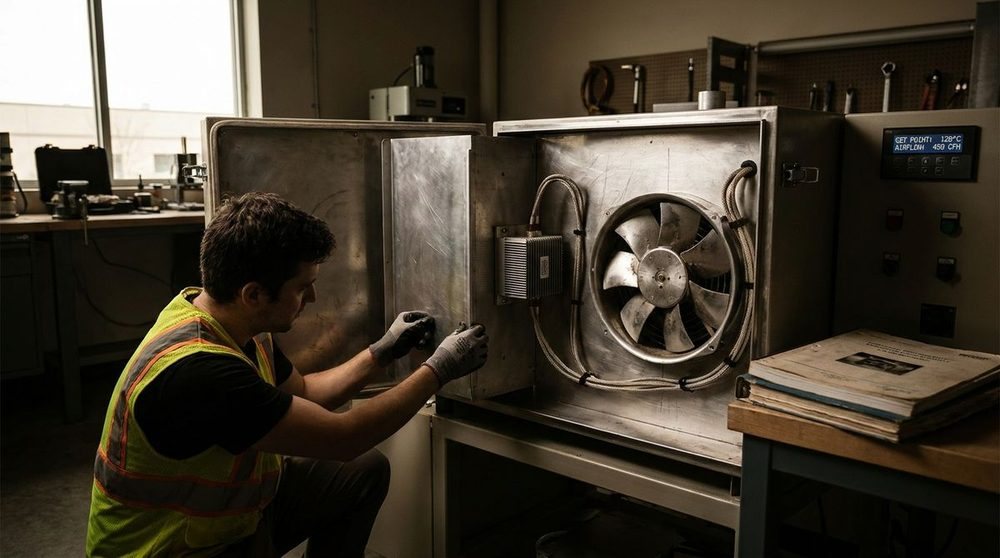
In the initial zones, the primary objective is to gradually raise the core temperature of the board without causing thermal shock to the outer skin. If the initial heat application is too aggressive, the surface of the board will melt or collapse, while the core remains cold and unexpanded. Therefore, the first few sections operate at a moderate heat level, allowing thermal energy to penetrate deeply into the polymer matrix through steady conduction and forced convection. As the board progresses into the middle zones, the temperature is increased to the optimal secondary foaming range. In these crucial central sections, the polymer reaches its ideal pliable state, and the residual blowing agents exert maximum pressure to expand the cellular structure.
The final zones are dedicated to thermal stabilization. Here, the temperature is carefully stepped down to slowly rigidify the newly expanded cells, locking in the final dimensions before the board exits the machinery. This gradual cooling process is just as critical as the heating phase, as a sudden exit into the cold factory air would induce new thermal stresses and negate the benefits of the entire treatment. The transition between these distinct zones must be absolutely seamless to guarantee continuous dimensional stability and high-quality surface finish.
Within each of these distinct zones, the aerodynamic behavior of the circulated air plays a vital role. The heating elements themselves do not radiate heat directly onto the product. Instead, they heat the air within a separate plenum, and this heated air is then forcefully directed across the board's surface via carefully designed nozzles or baffles. This indirect heating method prevents the formation of localized hot spots that could permanently scorch the polymer surface. The velocity and volumetric flow rate of the air must be independently adjustable for each zone, giving operators complete control over the rate of convective heat transfer.
Zone Designation |
Primary Function |
Target Thermal Range |
Airflow Velocity Objective |
Convection Strategy |
|---|---|---|---|---|
Pre-Heating Zone |
Initial thermal penetration and shock prevention |
Moderate |
High volume, low velocity |
Gentle surface warming |
Expansion Zone 1 |
Core temperature elevation and stress relaxation |
Progressive increase |
Medium volume, medium velocity |
Deep thermal saturation |
Expansion Zone 2 |
Maximum secondary expansion of blowing agents |
Peak operational heat |
High volume, optimized flow |
Rapid cell volumization |
Stabilization Zone |
Gradual rigidification of polymer matrix |
Progressive decrease |
Low volume, steady flow |
Dimensional lock-in |
Cooling Transition |
Preparation for ambient factory conditions |
Minimal heat |
Controlled ambient mix |
Final stress prevention |
The success of the secondary expansion process is not dictated solely by the application of thermal energy; it is equally dependent on the duration for which the material is exposed to that energy. This duration, known in the industry as residence time, is a foundational parameter in the physics of polymer processing. If the board travels through the heated sections too quickly, the thermal energy will not have sufficient time to penetrate the core. Consequently, the outer skin may appear properly cured, but the internal cellular structure will remain under-expanded and highly stressed. This leads to delayed warping and unpredictable dimensional shifts days or weeks after the product has been shipped to the customer.
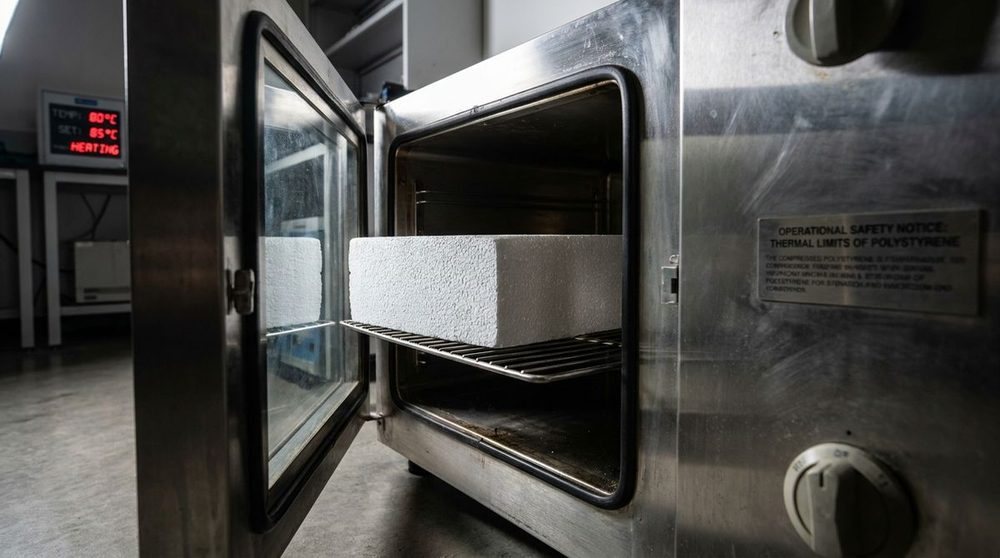
Conversely, an excessively long residence time presents its own set of critical manufacturing challenges. Prolonged exposure to elevated temperatures can cause the delicate polymer walls separating the individual cells to weaken and ultimately rupture. When cell rupture occurs, the insulating blowing gases escape, the board collapses, and the material's structural and thermal resistance properties are permanently destroyed. Therefore, calculating and maintaining the precise residence time is absolutely mandatory. This calculation involves complex variables, including the thickness of the board, the specific formulation of the polymer blend, the type of blowing agent utilized, and the operational speed of the entire extrusion line.
To manage this delicate balance, modern curing chambers utilize highly advanced drive systems that synchronize perfectly with the upstream haul-off units. This synchronization ensures that the board moves through the thermal sections at a constant, unwavering velocity. Operators carefully adjust the length of the curing chamber and the speed of the drive rollers to dial in the perfect residence time for each specific product SKU. Furthermore, the robust insulation surrounding the chamber ensures that the internal thermodynamic environment remains perfectly stable throughout the entire duration of the board's journey. By meticulously controlling the residence time, manufacturers guarantee that every single cubic centimeter of the foam board receives the exact quantum of thermal energy required for optimal expansion and permanent stress relief.
The mathematical relationship between extrusion speed and curing chamber length dictates the physical footprint of the production facility. For high-capacity lines producing extremely thick boards, the curing chamber must be significantly elongated to provide the necessary residence time without slowing down the upstream extruders. This requires substantial capital investment and floor space, but it is an unavoidable necessity for achieving top-tier product quality. Engineers must carefully calculate the thermal load requirements for these extended chambers, ensuring that the heating elements and circulation fans are appropriately sized to maintain the required environmental conditions across a vast internal volume.
Furthermore, the formulation of the polymer blend itself can influence the required residence time. Different grades of polystyrene possess varying melt flow indices and thermal conductivities. Additionally, the specific type and concentration of blowing agent and nucleating additives alter the expansion dynamics. Production managers must rely on empirical data and rigorous testing protocols to establish the optimal residence time for each unique formulation. These established parameters are then programmed into the central control system, creating a vast library of "recipes" that allow for rapid and seamless changeovers between different product specifications.
The temperature profile of the curing equipment is the precise mathematical curve that plots the thermal environment against the longitudinal progression of the board through the machinery. This profile is not a flat line; rather, it is a highly engineered curve designed to manipulate the polymer physics at the microcellular level. Establishing the correct profile requires an extraordinary level of precision and sophisticated electronic oversight. A PID temperature control accuracy of ±1.5°C is strictly maintained throughout the entire length of the system. This extreme accuracy prevents even the slightest micro-fluctuations that could trigger uneven expansion or localized surface degradation, ensuring that the product meets the highest industrial standards.
The profile begins with a gentle upward slope in the pre-heating sections, designed to match the specific thermal conductivity of the polystyrene material. Because foam is naturally an excellent insulator, driving heat into the core requires a calculated differential between the ambient air inside the chamber and the surface of the board. The profile curve then peaks in the primary expansion zones, where the optimal softening point of the polymer aligns perfectly with the peak vapor pressure of the expanding gases. After this peak, the profile follows a meticulously calculated downward slope. This descending curve must be engineered to prevent the cells from collapsing as the internal gas pressure naturally decreases with the dropping temperature.
To execute this complex profile flawlessly, the equipment relies on a network of highly sensitive thermocouples and advanced programmable logic controllers (PLCs). The sensors constantly feed real-time data back to the central processor, which makes micro-adjustments to the heating elements and circulation fans thousands of times per second. This automated precision removes human error and ensures repeatable success across continuous production shifts.
Profile Segment |
Heating Element Output |
Sensor Feedback Priority |
Aerodynamic Pressure Focus |
Operational Tolerance |
|---|---|---|---|---|
Initial Entry |
40-50% Capacity |
Surface temperature monitoring |
Positive pressure maintenance |
Strict ±1.5°C |
Ramping Phase |
70-85% Capacity |
Core thermal differential |
Balanced circulation |
Strict ±1.5°C |
Peak Expansion |
30-40% (Maintenance) |
Vapor pressure optimization |
Downward forced convection |
Strict ±1.5°C |
Gradual Descent |
10-20% Capacity |
Controlled cooling rate |
Minimal turbulence |
Strict ±1.5°C |
Exit Transition |
0% (Heaters off) |
Ambient differential |
Exhaust management |
Strict ±1.5°C |
The calibration of these sensors is a critical maintenance task that must be performed regularly. Even a minor drift in sensor accuracy can cause the PID controller to apply incorrect thermal loads, deviating from the established profile curve. Manufacturers typically employ certified metrology technicians to verify the accuracy of the thermocouples using traceable reference standards. This rigorous calibration schedule guarantees that the data driving the automated control loops is absolutely reliable, preventing systemic quality drift over long production campaigns.
Beyond simply controlling the heating elements, the PLCs must also manage the exhaust and fresh air intake systems. As the boards pass through the chamber, small amounts of residual blowing agent may diffuse into the internal atmosphere. If this gas concentration becomes too high, it can alter the thermal conductivity of the air and pose safety risks. The automated system continuously monitors the atmospheric composition and adjusts the exhaust dampers to maintain a safe and consistent internal environment, all while compensating for the slight heat loss associated with the ventilation process.
Dimensional stability is the ultimate metric of quality in the production of polystyrene foam boards. A board that shrinks, expands, or warps after installation is considered a catastrophic failure in the construction industry. The independent thermal sections within the curing equipment are the primary drivers of this crucial stability. By exposing the extruded material to a highly structured thermal journey, the equipment systematically eliminates the chaotic internal forces that cause post-production deformation, guaranteeing long-lasting structural performance in diverse environments.
When the board initially exits the die, the polymer chains are stretched and oriented in the direction of the extrusion flow. This artificial orientation creates massive internal tension. As the board enters the precise thermal sections of the curing equipment, the elevated heat allows these stretched polymer chains to relax and return to their natural, unstressed coiled state. This physical relaxation permanently neutralizes the tension, ensuring that the board will not suddenly warp when exposed to direct sunlight or varying ambient temperatures at a construction site. The incorporation of CFD-optimized air ducts ensuring uniform wind speed and pressure across the entire width is vital during this relaxation phase, as uneven airflow would cause certain sections of the board to relax faster than others, inadvertently inducing new, permanent deformities.
Furthermore, the precise thermal sections stabilize the cellular gas dynamics. The secondary expansion process equalizes the pressure inside the billions of microscopic cells with the external atmospheric pressure. Once the board passes through the final stabilization zones and the polymer matrix rigidifies, this pressure equilibrium is permanently locked in. Because the internal and external pressures are balanced, the board will not shrink or expand when transported to different altitudes or subjected to extreme weather conditions. The meticulous management of the thermal environment transforms a volatile, freshly extruded plastic mass into an inert, highly reliable, and dimensionally stable building material capable of performing flawlessly for decades.
This structural integrity is particularly critical in applications involving composite panels or exterior insulation finishing systems (EIFS). In these applications, the foam board acts as a rigid substrate for adhesives, reinforcing meshes, and exterior renderings. Any post-production shrinkage or expansion would immediately compromise the adhesion layers, leading to delamination and massive structural failures. By ensuring absolute dimensional stability through advanced thermal curing, manufacturers guarantee that their products will serve as a dependable foundation for these complex, multi-layered construction systems.
The verification of dimensional stability involves rigorous quality assurance testing protocols. Samples are routinely cut from the production line and subjected to accelerated aging tests in specialized environmental chambers. These chambers simulate extreme temperature fluctuations and humidity cycling. Only materials that have undergone proper thermal curing can survive these aggressive tests without exhibiting measurable dimensional changes. This empirical data provides manufacturers with the confidence to offer long-term performance warranties, a crucial competitive advantage in the modern building materials market.
The industrial secondary expansion equipment stands as the undisputed cornerstone of quality assurance in modern polystyrene foam board manufacturing. Without this sophisticated thermodynamic intervention, producing materials that meet the rigorous dimensional tolerances required by today's construction sector would be physically impossible. The seamless integration of independent thermal sections, forced convection dynamics, and extreme precision control architecture ensures that every single board achieves its maximum potential thickness, optimal density, and absolute flatness.
By systematically relieving manufacturing stresses and facilitating controlled cellular expansion, this specialized machinery completely eliminates the risks of post-production shrinkage and warping. Manufacturers who leverage these advanced thermal profiling technologies secure a massive competitive advantage, delivering superior insulation products that offer unparalleled reliability and long-term performance in the field. Ultimately, mastering the curing process is the defining factor in achieving operational excellence and dominating the foam board market. The engineering principles behind these thermal systems extend deeply into materials science and fluid dynamics. By maintaining a rigorous adherence to established thermodynamic laws, operators can significantly decrease waste and improve overall yield. Furthermore, the integration of smart sensors and automated feedback loops ensures that these systems operate at peak efficiency with minimal human intervention. Training personnel to interpret the data generated by these advanced controllers is essential for maintaining consistent production quality. Regular maintenance and calibration of the heating elements, circulation fans, and digital sensors are non-negotiable requirements for preventing unexpected downtime and equipment failure. When these operational best practices are rigorously applied, the resulting foam products consistently exceed industry standards for compressive strength, thermal resistance, and long-term durability. Industry leaders recognize that investing in high-quality curing infrastructure is not an optional expense, but a mandatory requirement for sustainable success in a highly competitive global market. Innovations in insulation materials continually push the boundaries of what is possible, but without precise thermal management, these advancements cannot be realized on a practical, industrial scale. The complex interplay between mechanical design, polymer chemistry, and electronic control systems represents the pinnacle of modern manufacturing technology. As environmental regulations become stricter, the ability to produce highly efficient insulation boards with minimal scrap will become even more critical, further elevating the importance of specialized secondary expansion equipment.
A: Independent thermal sections allow operators to create a highly specific temperature profile tailored to the polymer's physical requirements. This ensures the board is gently pre-heated, optimally expanded, and carefully stabilized without experiencing thermal shock, surface melting, or uneven cellular growth.
A: Forced convection utilizes high-performance fans and aerodynamically designed ducts to continuously circulate the heated air. This guarantees that thermal energy is distributed absolutely evenly across the entire surface and thickness of the board, preventing localized hot spots that could destroy the cellular structure.
A: Polystyrene is extremely sensitive to thermal fluctuations. Even minor deviations in the thermal environment can cause the polymer walls to rupture or fail to expand fully. Maintaining a strict ±1.5°C accuracy ensures the material remains exactly within its optimal softening and expansion window.
A: Residence time dictates how long the board is exposed to the thermal treatment. Adequate time is required for the thermal energy to penetrate the core and for the stretched polymer chains to fully relax. If the time is too short, internal stresses remain trapped, leading to inevitable warping later.
A: Utilizing advanced aerodynamic ducting ensures that the air pressure and velocity remain completely uniform across the entire width of the machinery. This prevents uneven convective heat transfer, which would otherwise cause different sections of the board to expand at different rates, resulting in a wavy or distorted final product.


