


Views: 0 Author: Site Editor Publish Time: 2026-11-09 Origin: Site


Effective xps extrusion fume extraction demands a localized volume of 15,000 m³/h at the primary die head, a strict factory baseline of 12 ACH (Air Changes per Hour), and a constant negative pressure of -15 Pa to thoroughly prevent hazardous odour dispersion into adjacent operating zones.
In the continuous manufacturing of extruded polystyrene, managing airborne emissions is a critical engineering requirement. The physical transformation of solid polystyrene granules into a cellular foam structure involves immense thermal and mechanical energy, coupled with the high-pressure injection of volatile blowing agents. When this high-temperature polymer melt exits the die, rapid atmospheric expansion happens. Identifying these specific emission sources is the foundational step in designing a safe industrial ventilation architecture.
The primary source of fume generation is the extrusion die head and the immediate downstream calibration zone. As the polymer melt transitions from the extreme high-pressure environment of the static mixer to ambient atmospheric pressure, the dissolved blowing agents vaporize. A significant fraction of these expanding gases escapes the polymer matrix into the surrounding factory air. In a modern co2 foam xps production line, chemical co-blowing agents such as ethanol, dimethyl ether (DME), or various hydrofluoroolefins (HFOs) are frequently utilized to optimize cellular structure, board density, and thermal resistance.
Beyond the expanding gases, the thermal degradation of the polystyrene resin itself generates dense fumes. Localized shear heating within the primary twin-screw extruder or the secondary single-screw cooling extruder can cause minor polymer chain scission. This releases styrene monomers and oligomers, which are characterized by their distinct odour and must be extracted.
When examining the melt pump and screen changer assemblies, a different emission profile emerges. During a routine screen change operation, the hydraulic mechanism shifts the filter plate, momentarily exposing the highly pressurized polymer melt to atmospheric oxygen at temperatures exceeding 200°C. This instant oxidation produces a smoke profile that requires localized, intermittent high-velocity extraction.
Another fume generation point is the edge trimming and cross-cutting station at the downstream end of the extrusion line. As the rigid XPS board is machined to its final geometric dimensions, the mechanical action of the high-RPM cutting blades breaks open millions of peripheral closed cells. This releases any trapped blowing agents instantaneously and generates quantities of fine, airborne polystyrene dust.
If-Then Engineering Rule for Extrusion Fumes:
If the formulation utilizes highly flammable co-blowing agents (such as DME, Isobutane, or absolute Ethanol) at concentrations exceeding 2.5% by weight, then the localized extraction systems at the die head and the downstream edge trimming station must be upgraded strictly to ATEX-rated explosion-proof specifications, incorporating non-sparking beryllium-copper exhaust fan blades, fully conductive grounding ductwork to dissipate static electricity, and continuous Lower Explosive Limit (LEL) monitoring sensors directly integrated with the main extruder control PLC.
Fume Generation Source | Primary Emission Components | Typical Fume Temperature (°C) | Required Capture Velocity (m/s) |
|---|---|---|---|
Primary Extruder Feed Throat | Fine polymer dust, moisture vapor | 30 - 50 | 0.8 - 1.2 |
Screen Changer & Melt Pump | Degraded polymer smoke, volatile VOCs | 180 - 220 | 1.8 - 2.5 |
Die Head and Calibration Plate | Blowing agents (CO2, Ethanol), Styrene | 110 - 130 | 2.5 - 3.5 |
Edge Trimming & Cross Cutting | Polystyrene dust, trapped agents | 20 - 40 | 18.0 - 22.0 |
The nature of these industrial emissions dictates that a single-fan extraction approach is insufficient. The ventilation architecture must match the specific aerodynamic properties, thermal buoyancy, and chemical hazards of each individual source with tailored capture velocities, hood geometries, and ducting routes.
Establishing the correct Air Changes per Hour (ACH) is the macro-level engineering parameter that dictates the atmospheric quality and safety profile within the manufacturing facility. While localized extraction hoods capture fumes directly at the point of physical generation, a significant percentage of fugitive emissions inevitably escapes the primary capture zones and diffuses into the broader workshop volume. The ACH determines how rapidly this contaminated air is exhausted.
Calculating the required ACH demands an accurate understanding of the volumetric capacity of the manufacturing facility. For highly detailed engineering requirements on factory layout, column bay sizing, and specific physical dimensions that directly impact these critical volumetric calculations, refer to our comprehensive engineering guide on Hall Height, Span and Cranage for an XPS Extrusion Line. To reliably achieve a factory baseline of 12 ACH, the primary extraction system must move over 518,000 m³ of air every single hour for a typical 120m long hall.
The required baseline ACH is heavily influenced by the specific physical production parameters, polymer formulation chemistry, and the geographic location of the facility. Understanding exactly Which Plant Conditions Support Stable CO2 XPS Production is essential; facilities utilizing highly volatile combinations of chemical co-blowing agents alongside standard liquid CO2 will require aggressive ventilation strategies.
In a modern XPS facility, the main extrusion hall requires the highest baseline ACH. Extrusion mechanical engineers mandate a minimum of 10 to 15 ACH strictly in this primary processing zone. This ensures that any fugitive styrene monomers or escaping blowing agents are rapidly diluted and evacuated from the breathing zone. The raw material storage area, conversely, requires minimal active ventilation, typically engineered for 4 to 6 ACH.
The curing and storage warehouse for the finished XPS boards presents a unique ventilation challenge. While the manufactured boards appear solid and structurally stable, they continue to slowly outgas residual chemical blowing agents for several weeks post-production during the necessary curing phase. If the storage warehouse is poorly ventilated, these heavier-than-air gases can accumulate rapidly at the concrete floor level. Therefore, the warehouse must be engineered for a continuous 6 to 8 ACH.
If-Then Engineering Rule for Workshop ACH:
If the ambient external temperature of the manufacturing facility routinely exceeds 35°C during peak summer months, resulting in internal workshop temperatures surpassing 45°C due to heavy machinery heat loads, then the baseline Air Changes per Hour (ACH) for the main extrusion hall must be dynamically increased by a factor of 1.5 (e.g., automatically shifting from 12 ACH to 18 ACH via Variable Frequency Drive control) to aggressively disrupt thermal stratification, prevent the accumulation of concentrated fume pockets at the roof apex, and protect the electrical integrity of overhead cranage systems.
Balancing the extraction volume with adequate, thermally conditioned make-up air is a crucial engineering balance. If the extraction fans pull 300,000 m³/h out of the building envelope, an equivalent volume of fresh air must be introduced. Failure to engineer sufficient make-up air will result in a negative pressure environment that disrupts the delicate thermal balance of the extrusion die lip.
The mechanical efficacy of an industrial fume extraction system is dependent on the geometric design, aerodynamic profiling, and spatial positioning of the localized exhaust hoods. An incorrectly positioned hood, even when powered by an oversized extraction fan, will fail to capture the buoyant thermal plume. The mechanical design must meticulously account for the capture velocity required at the exact physical point of fume generation.
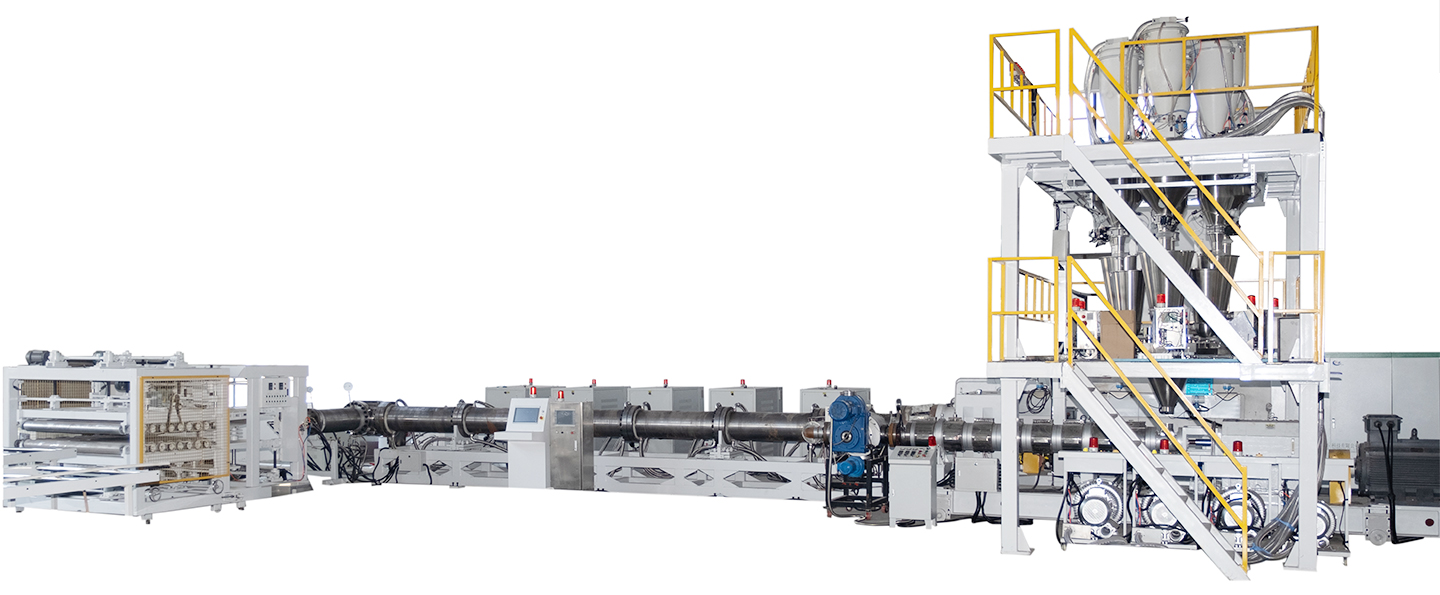
At the primary die head, where the XPS foam emerges from the high-pressure environment and violently expands, a specialized, custom-engineered canopy hood is an operational mandatory. This hood must feature extensive aerodynamic flanging to minimize edge turbulence and maximize the active capture zone. Because the extruded foam is a continuous, moving web, the hood must extend laterally beyond the anticipated width of the finished board.
The capture velocity drops exponentially as the physical distance from the hood face increases, dictated strictly by inverse-square aerodynamic laws. Therefore, the die head canopy hood must be positioned as close to the polymer melt as physically possible without mechanically interfering with operator access. Typically, a vertical clearance of exactly 250 mm to 350 mm is engineered to reliably achieve a required capture velocity of 2.5 m/s.
For the downstream edge trimming and heavy granulator zones, standard open canopy hoods are utterly ineffective due to the high kinetic velocity of the particles generated by rotating mechanical cutting blades. In these high-kinetic energy zones, fully enclosing hoods are strictly required. The entire cutting mechanism must be physically shrouded within a heavy-gauge steel housing, and the extraction duct must be connected directly to this sealed enclosure.
If-Then Engineering Rule for Hood Design:
If the average ambient cross-draft velocity in the extrusion hall exceeds 0.5 m/s, then the primary canopy hood over the die head must be immediately retrofitted with lateral polycarbonate baffles (transparent drop-down physical curtains) extending downward to within 100 mm of the calibration plates, ensuring the highly buoyant thermal fume plume is not deflected away from the critical capture zone.
The main extraction ductwork itself must be engineered with extreme precision to maintain specific internal air transport velocities. If the air speed inside the duct drops below 12 m/s, heavier molecular weight fumes, degrading polymer oligomers, and sublimated processing waxes will physically precipitate out of the airstream and condense on the interior duct walls, creating a localized fire hazard.
Modern foam extrusion facilities, particularly those operating in strict jurisdictions with rigid air quality mandates, must actively treat, scrub, and chemically neutralize these emissions before releasing them into the external atmosphere. The core engineering focus shifts rapidly from internal occupational safety directly to external environmental compliance, focusing specifically on Volatile Organic Compound (VOC) destruction efficiency.
The raw, untreated exhaust gas stream from an XPS die head contains a dense, complex chemical mixture of unreacted blowing agents, pungent styrene monomers, vaporized flame retardants, and microscopic polymer particulates. Releasing this untreated chemical stream directly into the external environment violently violates compliance protocols in almost all developed industrial zones.
For the initial removal of heavy, condensable organics, sublimated waxes, and coarse polymer particulates, advanced wet scrubbing systems are frequently deployed. In a high-efficiency packed-bed water scrubber, the raw exhaust gas is forcefully routed counter-current through a continuous deluge of atomized water to effectively wash out water-soluble compounds and precipitate heavy vapours directly into a sludge reservoir.
To reliably achieve stringent, legally mandated odour control and physically capture light VOCs, industrial activated carbon filtration represents the undisputed industry standard secondary abatement stage. The sizing of the massive carbon bed is absolutely critical. The system design is rigidly dictated by the "Empty Bed Contact Time" (EBCT) or "dwell time" that the gas stream spends interacting with the carbon media.
If-Then Engineering Rule for Fume Filtration:
If the extrusion formulation incorporates highly brominated flame retardants (such as HBCD alternatives) or other heavily halogenated additives that can thermally degrade into highly acidic hydrobromic (HBr) or hydrochloric (HCl) gaseous byproducts at standard operating temperatures, then an active alkaline wet scrubbing stage (utilizing a continuously monitored sodium hydroxide chemical dosing system) must be installed immediately upstream of any activated carbon filter bed to chemically neutralize the highly acidic fumes before they irreversibly blind, corrode, and completely destroy the expensive activated carbon media structure.
In highly regulated industrial jurisdictions, the final external exhaust stack must be structurally engineered with standardized, flanged testing sampling ports located at specific aerodynamic distances downstream from any turbulent flow disturbances. This allows environmental regulatory bodies to insert precision isokinetic sampling probes to independently verify that the VOC destruction and removal efficiency meets local compliance thresholds.
The engineering of fume extraction and exhaust ventilation in an XPS extrusion plant is never a peripheral utility; it is a fundamental process requirement that directly dictates operator safety, final product quality, and the strict legal viability of the manufacturing operation. A poorly designed, under-powered exhaust system will inevitably lead to highly hazardous working conditions, accelerated machinery corrosion from acidic byproducts, and ultimately, crippling regulatory shutdowns.
To ensure your upcoming XPS facility meets all rigorous ventilation parameters and stringent environmental compliance standards, our engineering team requires specific operational data to begin the critical aerodynamic calculations and HVAC system sizing. Please provide your exact facility parameters in the form below to allow us to customize the ventilation network completely.
Q: Is extraction required for XPS extrusion? A: Yes, extraction is an absolute mandatory engineering requirement. The extrusion process continuously releases volatile blowing agents, styrene monomers, and fine polymer dust. Failure to extract these fumes results in toxic atmospheric conditions, rapid toxic odour accumulation, and extreme risks of explosive gas concentrations directly around the die head.
Q: How many air changes per hour? A: The main factory extrusion hall requires a strict minimum of 10 to 15 Air Changes per Hour (ACH). Raw material storage areas need 4 to 6 ACH, while board curing warehouses demand 6 to 8 ACH with highly specialized floor-level mechanical extraction to continuously sweep out heavy, settling residual blowing agents.
Q: Where should hoods be placed? A: Aerodynamically flanged canopy hoods must be placed exactly 250-300 mm above the primary die head and calibration zone. Fully enclosing heavy steel hoods must be utilized directly around downstream edge trimmers and granulators to physically contain and immediately capture high-velocity particulate dust exactly at the generation source.


