


Views: 0 Author: Site Editor Publish Time: 2026-10-18 Origin: Site


Selecting the drive mechanism for plastic extrusion machinery is critical. The ZLYJ gearbox is the standard for single-screw extruders, integrating a high-precision gear transmission with a robust thrust bearing housing. Understanding its selection, parameters, and troubleshooting is fundamental. Properly integrated, it dictates operational efficiency, melt consistency, and longevity of the production line. Mastering gearbox selection, load matching, and maintenance reduces downtime and optimizes yield.
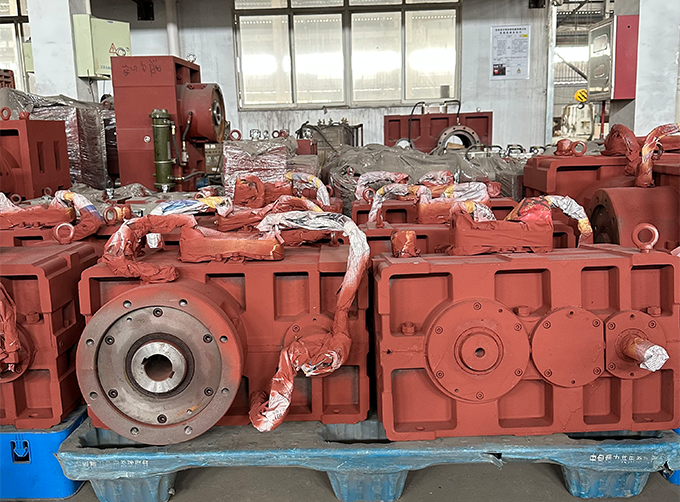
Precision Engineering: Machined to stringent standards, featuring Gear accuracy Grade 6 (GB10095-88) for smooth meshing and minimal backlash.
Robust Surface Durability: Gear surface hardness HRC58-62 ensures internal components withstand mechanical stresses during extrusion.
Comprehensive Capacity Spectrum: Models ZLYJ112 to ZLYJ630 (18 models) provide versatile torque capacities matching varying screw diameters.
Controlled Velocity Parameters: Operating efficiently with an Input speed ≤ 1,500 RPM, balancing thermal generation with mechanical output.
Wide Thermal Tolerance: Engineered for resilience across a broad Operating temp -40°C to +50°C.
Proactive Maintenance Focus: Regular monitoring for overheating, abnormal noise, and oil leakage prevents failures, maximizing bearing lifespan.
The ZLYJ gearbox is a specialized transmission exclusively for single-screw extruders. Unlike standard reducers, it integrates a rugged thrust bearing directly into the output shaft housing. Single-screw extruders generate massive axial back-pressure when forcing molten polymer through a die. If transmitted to the motor, this force causes instant failure. The integrated thrust bearing safely absorbs this load, allowing the gear transmission to focus purely on delivering high rotational torque required to melt plastic.
Constructed from high-strength alloy steels, internal gears undergo advanced carburizing and quenching. This produces a component hard outside to resist wear and tough inside to absorb shock loads. The heavy-duty housing incorporates structural ribs for rigidity and thermal dissipation. Combined splash and forced lubrication ensure every gear mesh and bearing receives cooling oil.
The gearbox translates high-speed motor output into low-speed, high-torque force for the screw. Housing the thrust bearing with the gears guarantees perfect alignment, preventing uneven wear, excessive vibration, and reduced efficiency.
Selecting the correct size and capacity is paramount. The ZLYJ series is categorized by the center distance between main gear shafts, correlating to physical dimensions, torque capacity, and thrust load rating.
Table 1: Model Size vs. Torque Capacity
Parameter | Description | Impact on Extrusion Process |
|---|---|---|
Model Center Distance | Specifies physical gearbox size. | Larger distances allow larger gears, increasing torque transmission. |
Gear Ratio | Input vs. output shaft speed math. | Determines screw speed, critical for controlling polymer melt. |
Output Torque | Twisting force delivered to screw. | Dictates ability to process high-viscosity materials without stalling. |
Axial Thrust Rating | Capacity to absorb backward pressure. | Ensures transmission is isolated from destructive die back-pressure. |
The ZLYJ lineup spans Models ZLYJ112 to ZLYJ630 (18 models) to accommodate any single-screw extrusion requirement. Numbers refer to the center distance of primary gears in millimeters. Moving from ZLYJ112 to ZLYJ630, critical parameters scale upward.
First, physical volume and weight increase. Larger housings contain larger gears, provide structural rigidity against twisting forces, and offer larger surface areas for heat dissipation.
Secondly, torque capacity grows exponentially. A small unit suits a laboratory extruder or small profile line. Larger models are designed for industrial compounding lines or heavy pipe extrusion where enormous volumes of viscous polymer are pushed through dies at high pressures.
Finally, the integrated thrust bearing is sized proportionally. The axial load generated by a small screw is manageable with standard bearings, but back-pressure from a large-diameter screw can be staggering. Larger models in the Models ZLYJ112 to ZLYJ630 (18 models) range employ highly specialized tandem thrust bearings ensuring intense axial forces are isolated from the precision gear train.
The dynamic relationship between input speed, gear ratio, and output torque defines the operational envelope. The system accepts an Input speed ≤ 1,500 RPM, aligning with standard synchronous speeds of industrial motors.
When the motor runs at rated speed, internal gear sets reduce this velocity based on the gear ratio. Typical ratios range widely depending on the polymer processed. Highly heat-sensitive materials require slow screw speeds to prevent shear-induced degradation, while high-throughput compounding utilizes a lower ratio for faster rotation.
Reducing input speed proportionally increases output torque. This multiplies the motor's turning force to a level capable of overcoming raw polymer resistance and melt viscosity. Pushing the system beyond the specified Input speed ≤ 1,500 RPM has severe consequences. Excessive speed leads directly to lubrication failure, as oil is flung away from gear teeth before forming a protective boundary film.
Matching a gearbox to an extruder requires engineering calculations balancing torque requirements, thrust loads, and dimensional constraints.
The fundamental factor is knowing the extruder screw diameter, which dictates material volume processed and surface area pushing against the polymer mass, determining the required rotational torque.
As screw diameter increases, required torque increases exponentially, necessitating a larger gearbox model. Flight depth, compression ratio, and plastic resin type heavily influence total torque demand. Extruding high-viscosity engineering plastics like polycarbonate requires substantially more continuous torque than extruding LDPE.
Engineers must calculate maximum continuous torque under severe operating conditions and select a gearbox whose rated output includes an appropriate safety factor. Undersizing leads to motor stalls, accelerated wear, and potential shaft shearing. Oversizing represents unnecessary capital expenditure. Exploring our diverse Products portfolio provides context on how components align with specific extrusion applications.
While rotational torque turns the screw, the thrust bearing firmly keeps it in place. Intense pressure at the die head creates an equal massive reaction force pushing the screw backward toward the drive unit. If the thrust bearing fails to support this extreme load, the screw will move backward, instantly destroying gearbox internals.
The critical axial thrust load is calculated based primarily on maximum anticipated melt pressure at the die and cross-sectional area of the screw root. Because different die configurations and polymer viscosities generate vastly different back-pressures, the thrust bearing rating must be carefully scrutinized.
The ZLYJ series features robust thrust bearings engineered for punishing conditions. However, actual bearing lifespan depends on actual physical load experienced versus theoretical rated capacity. Operating continuously near maximum thrust rating shortens the bearing's L10 life. Carefully selecting a gearbox model where internal thrust bearing capacity substantially exceeds calculated maximum axial load is crucial for long-term, maintenance-free operation.
Internal durability is dictated by two specifications: dimensional precision and metallurgical hardness. These metrics define absolute mechanical limits and expected longevity.
Table 2: Gear Accuracy and Hardness Specifications
Specification | Technical Value | Importance in Extrusion Applications |
|---|---|---|
Precision Standard | Gear accuracy Grade 6 (GB10095-88) | Ensures perfect tooth meshing, minimizing vibration and maximizing efficiency. |
Surface Treatment | Gear surface hardness HRC58-62 | Provides extreme resistance against abrasive wear, extending component lifespan. |
Core Toughness | Optimized via Tempering | Allows gear teeth to absorb sudden shock loads without suffering brittle fracture. |
Operational Environment | Operating temp -40°C to +50°C | Guarantees oil and metallurgy remain stable regardless of external factory conditions. |
The combination of Gear accuracy Grade 6 (GB10095-88) and Gear surface hardness HRC58-62 is the cornerstone of reliability. Without Grade 6 accuracy, gears mesh unevenly. This contact concentrates immense continuous torque onto a tiny stressed portion of the gear tooth, leading directly to rapid material fatigue and catastrophic failure.
Conversely, without Gear surface hardness HRC58-62, perfectly aligned gears would quickly wear down under the immense friction and extreme pressure of heavy-duty extrusion. The advanced carburizing process infuses carbon into the alloy steel surface, rapidly cooled to lock in that extreme file-hard characteristic. This creates a highly protective outer shell over a softer, shock-absorbing inner core. This dual-property metallurgy ensures when the extruder encounters a sudden surge in load, gears safely absorb intense impact without shattering, while maintaining exceptional wear resistance. Furthermore, this robust construction withstands a wide Operating temp -40°C to +50°C.
Even robustly engineered industrial systems experience operational issues if improperly maintained. Recognizing early warning signs of mechanical distress and troubleshooting accurately saves tens of thousands of dollars in unscheduled downtime.
Table 3: Troubleshooting Common ZLYJ Gearbox Issues
Symptom | Potential Root Cause | Recommended Corrective Action |
|---|---|---|
Rapid Overheating | Low oil level, excessive input speed, or blocked cooling system. | Verify oil level, ensure Input speed ≤ 1,500 RPM, and flush cooling lines. |
High-Pitched Whining | Misaligned gear mesh or severe loss of Gear accuracy Grade 6 (GB10095-88). | Inspect gear teeth for wear patterns; replace gears if accuracy is compromised. |
Heavy Grinding/Vibration | Premature failure of the main thrust bearing. | Immediately halt operation, measure axial play, and replace the thrust bearing. |
Oil Leaking at Shaft | Degraded shaft seal or blocked pressure breather vent. | Clean the breather vent thoroughly and replace the high-temperature shaft seals. |
Overheating is a common issue. Intense friction generated by transmitting massive high torque produces significant thermal energy. The system utilizes specialized lubricant to dramatically reduce physical friction and actively carry heat away from sensitive gear meshes and heavy bearings. If the unit is noticeably overheating, first thoroughly check the oil. The oil level must be perfectly correct—too little oil starves internal components, while too much causes excessive churning, generating more frictional heat.
Ensure the main drive motor is not driving the system beyond the specified Input speed ≤ 1,500 RPM. High rotational speeds drastically increase internal frictional heat. If equipped with an internal water-cooling coil, carefully inspect vital components for internal blockages, mineral scale buildup, or flow restrictions. Ambient external temperature also plays a critical role; while officially rated for an Operating temp -40°C to +50°C, operating continuously at the extreme 50°C limit requires the auxiliary cooling system to function perfectly.
A healthy, well-maintained gearbox operates continuously with a consistent smooth acoustic hum. A sudden change—sharp grinding, high-pitched whining, or rhythmic clunking—is a red flag indicating severe mechanical distress. Whining often points to a developing issue with the gear mesh, perhaps due to chronic inadequate lubrication or gradual wear that compromised the critical Gear accuracy Grade 6 (GB10095-88) tolerances.
Heavy vibration or a deep unsettling grinding noise is typically indicative of impending bearing failure. The integrated thrust bearing is subjected to immense punishing forces. If it begins failing, the extruder screw rapidly exhibits excessive axial play, leading to severe destructive vibration transmitting through the cast iron housing. Troubleshooting complex noise requires pinpointing the exact source. Experienced maintenance mechanics utilize industrial stethoscopes or digital vibration analysis tools to determine whether noise originates from high-speed input shaft bearings, massive low-speed output shaft, or heavy-duty thrust bearing assembly.
Oil leakage is a critical precursor to complete lubrication starvation and catastrophic mechanical failure. Leaks typically occur at main shaft seals, housing parting lines, or around the delicate oil sight glass.
Shaft seals naturally wear out over time due to constant friction, dirt ingress, or thermal degradation from localized heat. If the gearbox operates in a dusty environment, floating particulate matter acts as an aggressive abrasive, quickly destroying the flexible seal lip. Another common cause of chronic oil leakage is a severely blocked breather vent. As the gearbox heats up during heavy operation, trapped air inside the casing expands. The breather vent allows this internal pressure to safely escape. If clogged with ambient dirt or melted plastic residue, internal pressure forcefully pushes lubricating oil out past the absolute weakest point. Regular cleaning of the vent and timely replacement of high-temperature seals mitigates this issue. If concurrently operating auxiliary processing equipment nearby, such as a high-speed Disc mill, actively maintaining a clean environment around all transmission units is crucial to extending delicate seal life.
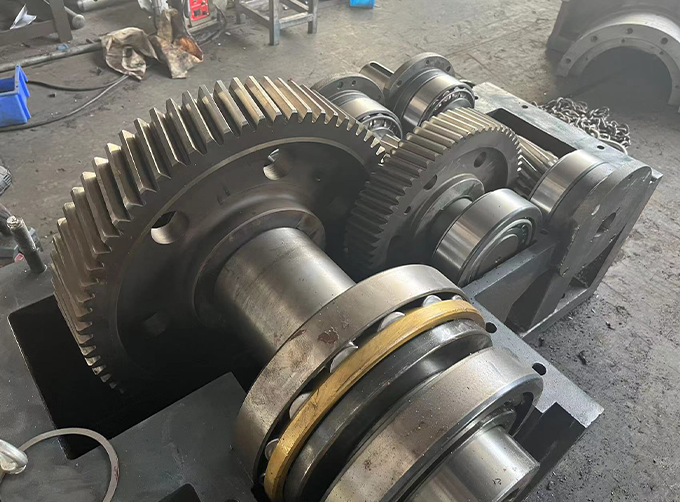
The reliability of your plastic processing operation hinges on the mechanical integrity of your main drive system. Selecting the correct transmission unit involves evaluating your specific screw diameter, required continuous output torque, and maximum anticipated axial thrust loads. By ensuring the selected unit falls appropriately within the comprehensive range of Models ZLYJ112 to ZLYJ630 (18 models), you align mechanical capacity with specific production requirements. Furthermore, adhering to operational parameters—especially maintaining an Input speed ≤ 1,500 RPM and respecting the official Operating temp -40°C to +50°C limits—safeguards delicate precision Gear accuracy Grade 6 (GB10095-88) and robust Gear surface hardness HRC58-62 from premature wear.
However, selecting a perfectly matched transmission is only the first part; proactive scheduled maintenance and intelligent troubleshooting keep the production line running profitably year after year. By monitoring for subtle early warning signs of internal overheating, identifying abnormal acoustic profiles immediately, and quickly addressing minor oil leakage, machinery operators can successfully intervene long before minor fixable issues escalate into catastrophic failures.
Ultimately, a reliable ZLYJ gearbox is the beating heart of the extruder. MXZ integrates these high-precision gearboxes into our complete XPS and PS foam extrusion lines, ensuring every component works in perfect mechanical harmony. Whether you are seeking a traditional CO2 foam XPS production line to expand your market or evaluating an advanced CO2-free foamed XPS production line for environmental compliance, partnering with an experienced manufacturer guarantees your entire factory system is engineered for maximum throughput, unmatched stability, and profitability.
A: The system operates safely and efficiently with an Input speed ≤ 1,500 RPM. Exceeding this velocity compromises the vital lubrication film, generates excessive internal thermal loads, and dramatically reduces expected operational lifespan of bearings and precision gear sets.
A: For a brand new gearbox installation, the initial oil change should occur after the first 300 to 500 hours of continuous operation to remove microscopic metal shavings generated during the break-in period. Subsequently, heavy-duty oil should be changed every 3,000 to 4,000 hours, or at least once a calendar year.
A: Yes, the heavily reinforced cast casing and advanced internal metallurgy are carefully designed to safely withstand a wide environmental range, officially rated for an Operating temp -40°C to +50°C. However, if starting the unit in extreme freezing cold conditions, use a specialized industrial lubricant with an appropriate winter viscosity grade.
A: Premature thrust bearing failure is almost always directly caused by continuously operating the extruder well beyond its officially rated axial load capacity, very often due to experiencing excessively high die pressure, accidentally processing un-melted solid material blocks, or encountering a sudden severe physical blockage in the extrusion head.
A: No. The ZLYJ series is meticulously engineered exclusively for single-screw extruders. Advanced twin-screw extruders fundamentally require a completely different, highly complex transmission architecture, generally known as a parallel distribution gearbox, which carefully splits incoming power into two parallel output shafts.


