


Views: 0 Author: Site Editor Publish Time: 2026-10-30 Origin: Site


The global push toward circular economy targets has drastically heightened the demand for high-quality micronized plastic powder. As recycling workflows in 2026 demand greater material purity and precise particle morphology to support closed-loop manufacturing, traditional grinding methods often fall short of meeting stringent industrial standards. Achieving the exact bulk density and flowability required for high-value applications like rotational molding, compounding, or extrusion requires advanced high-speed disc pulverizer for plastic technology capable of consistent, ultra-fine size reduction.
To bridge this gap, an industrial disc pulverizer for plastic operates as a high-speed precision grinding system. It is specifically engineered to process polymer pellets, edge trims, and regrind—particularly challenging materials like rigid PVC, polyethylene, and other impact-resistant thermoplastics—into fine, reusable powders. By feeding materials through the center of a fixed grinding disc mounted concentrically against a high-speed rotating disc, the disc pulverizer for plastic utilizes centrifugal force, impact, and intense shear to reduce the polymer's physical dimensions without destroying its molecular integrity.
Selecting the right machinery for your facility requires a comprehensive understanding of key engineering specifications. Factors such as disc diameter directly dictate throughput capacity, while precise gap control and advanced thermal regulation prevent heat-sensitive polymers from melting or agglomerating during high-speed friction. By evaluating these parameters alongside automated feeding mechanisms and safety systems, you can identify the optimal configuration to maximize processing efficiency, minimize downtime, and secure a competitive edge in modern material recovery using a high-quality disc pulverizer for plastic.
Choose a disc diameter based on your required capacity and space.
Dual-cooling systems are essential to prevent heat-sensitive polymer agglomeration.
Segmented disc designs allow for targeted, cost-effective maintenance.
Automated vibratory feeders stabilize torque and prevent motor overloads.
Precise gap adjustment is the primary control for particle size distribution.
PLC integration is necessary for real-time thermal and load monitoring.
When selecting a disc pulverizer for plastic, the diameter of the grinding discs is the primary engineering specification that governs your facility's processing capacity and physical layout. This dimension directly dictates the surface area available for size reduction and the peripheral speed of the rotating disc, establishing a hard limit on hourly throughput and determining the overall footprint of the machinery.
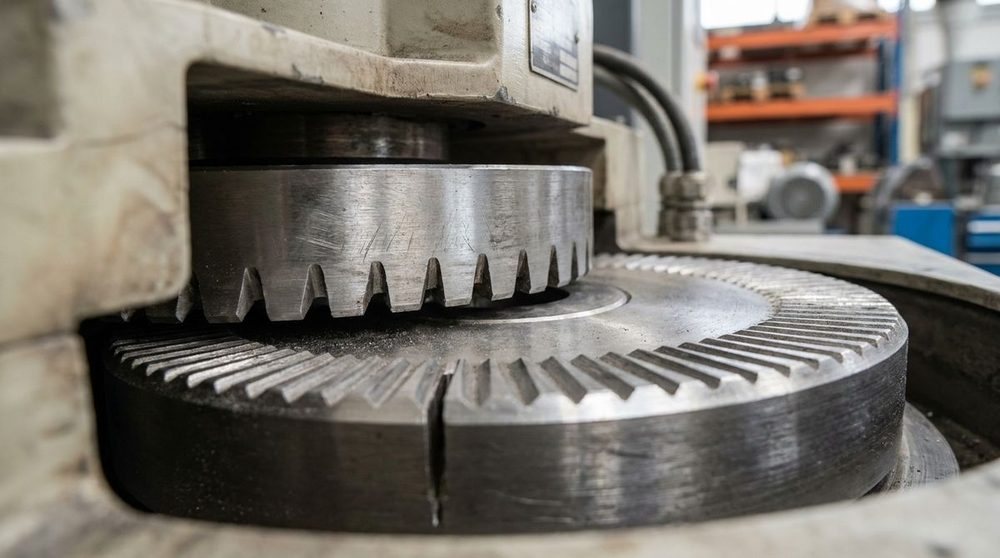
As disc diameter scales, both motor power requirements and physical footprints increase to accommodate the heightened mechanical load.
Disc Diameter (mm) | Motor Power (kW) | Throughput (kg/h) |
|---|---|---|
300 | 30 | 300-400 |
500 | 45 | 300-500 |
600 | 75 | 600-900 |
800 | 132 | 1,000-1,500 |
Beyond throughput, the spatial configuration of the grinding chamber influences how material behaves under centrifugal force. Polymer regrind enters the center of a vertically fixed stationary disc, which sits concentrically against the high-speed rotating disc. Centrifugal force drives the particles outward through the narrowing gap between the two discs, where they undergo intense shear and impact using the disc pulverizer for plastic.
Understanding the distinction between grinding technologies is vital for optimal material recovery. A disc pulverizer for plastic focuses on high-speed shearing, whereas plate mills emphasize friction and compression for ultra-fine applications.
Feature | Disc Mill (Pulverizer) | Plate Mill |
|---|---|---|
Primary Mechanism | Shearing & Impact | Friction & Compression |
Ideal Particle Size | 20–120 mesh | 80–400 mesh |
Throughput | High (up to 1,500 kg/h) | Lower |
Best Application | Raw recyclates, bulky regrind | Ultra-fine refinement |
The disc pulverizer for plastic is preferred for high-throughput, medium-coarse grinding of raw recyclates, while a plate mill is designed for specialized, ultra-fine refinement. This operational distinction ensures you select the correct machinery without over-specifying electrical power requirements. You can learn more about disc mills here.
The precise gap adjustment between the stationary and rotary discs is the critical variable determining the final micron size and particle distribution of the output powder. Adjusting this gap allows operators to customize the output of the disc pulverizer for plastic.
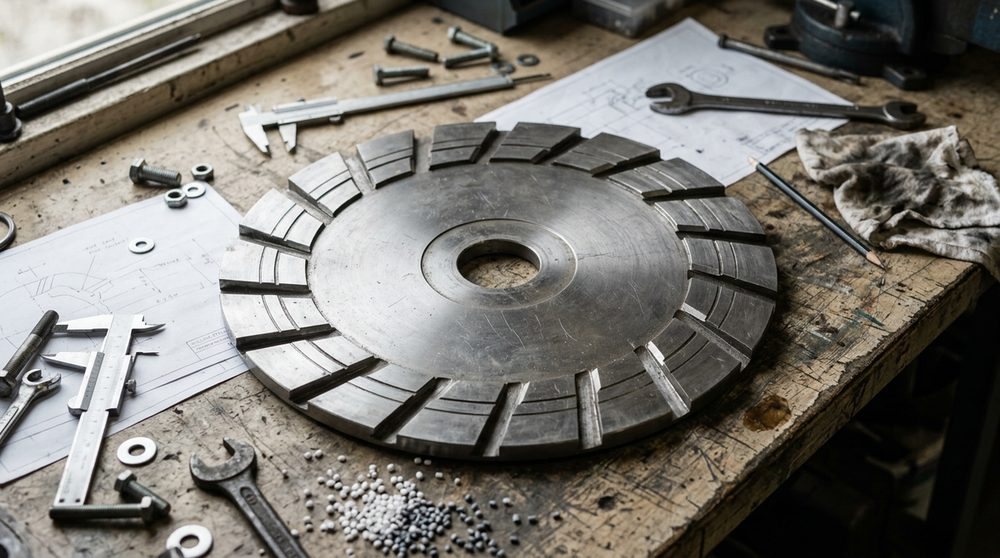
A: Ensure the system is de-energized, locked out, and the grinding chamber is fully accessible for safe maintenance procedures.
A: Use a high-precision feeler gauge to measure the current clearance between the stationary and high-speed rotating discs at multiple points around the periphery.
A: Utilize the micro-adjustment mechanism on the stationary disc housing to incrementally move the disc until the target clearance for your desired mesh size is achieved.
A: Re-check the clearance using the feeler gauge at all points to ensure uniform gap distance, which prevents localized overheating and disc contact.
A: Lock the adjustments, close the chamber, and run a test batch of material to verify the resulting particle size distribution matches your operational requirements.
A tighter gap increases shear and friction, yielding a highly concentrated, narrow particle size distribution, which is essential for preserving the bulk density and flowability of the processed polymer.
Continuous high-throughput operations place immense thermal and mechanical stress on the disc pulverizer for plastic. Under constant friction, the heat generated can cause standard metal discs to expand, narrowing the pre-set gap and risking catastrophic disc-to-disc contact.
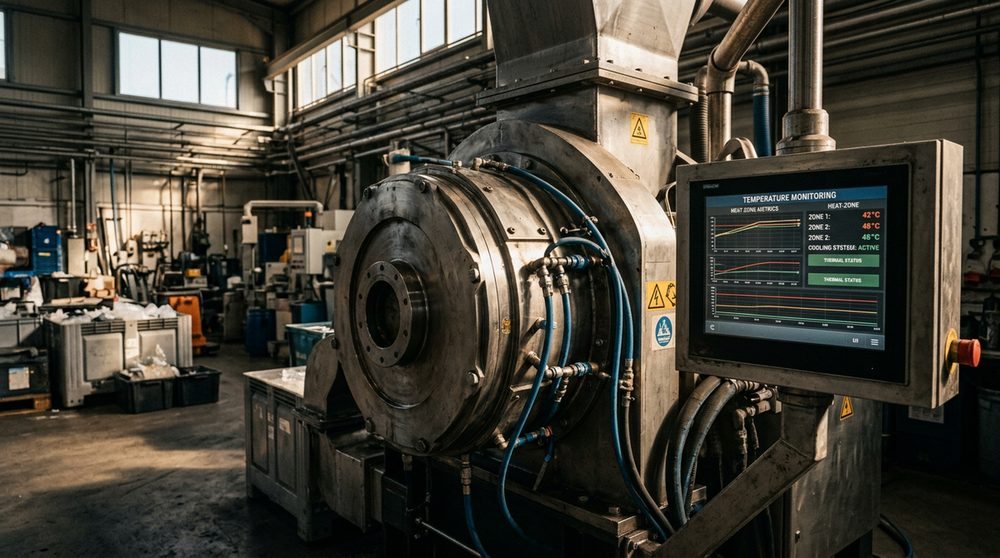
A: Operators should conduct scheduled visual inspections to check the sharpness and integrity of tooth segments around the periphery of the discs.
A: Instead of discarding monolithic discs, use segmented assemblies to replace only the specific worn or damaged tooth segments, which drastically reduces maintenance costs.
A: When replacing segments, ensure precise torque calibration and weight matching to prevent dynamic imbalance, which could otherwise lead to premature bearing failure.
To mitigate thermal risks, advanced pulverizers employ dual cooling systems that combine integrated water jackets with high-volume air flow. This ensures the disc pulverizer for plastic remains within safe operating limits.
To prepare your facility for the high-capacity demands of the 2026 circular economy, consider these implementation steps to optimize your capital investment in a high-quality disc pulverizer for plastic.
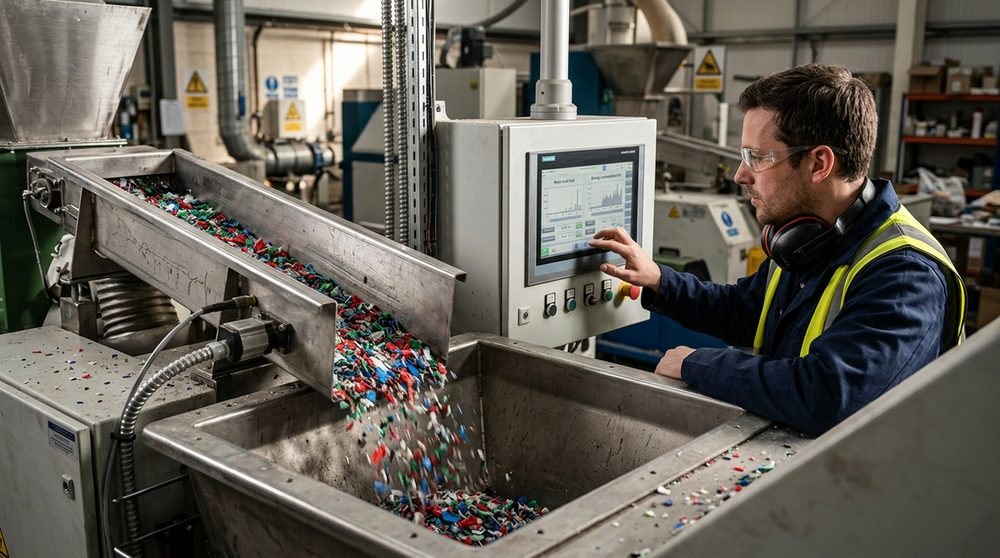
When selecting a plastic pulverizer disc supplier, prioritize manufacturers who offer:
Robust engineering support for custom grinding tooth geometries.
Comprehensive PLC integration for real-time motor and thermal load tracking.
Access to high-wear-resistant alloys like chrome-white iron for extended disc life.
Proven reliability in handling your specific polymer regrind profile.
To transition your recycling workflow into a high-capacity, closed-loop system, your choice of a disc pulverizer for plastic must align with your specific polymer profiles and throughput targets. Selecting a machine with the correct disc diameter, cooling mechanism, and tooth profile is vital for maximizing recycling throughput while safeguarding material quality. By focusing on these four technical specifications—capacity, thermal control, shearing geometry, and automated safety—you ensure a long-term, profitable investment.
A: Precise gap adjustment regulates the clearance between the stationary and rotary discs, directly controlling the final particle size and distribution. Tighter gaps produce finer, more uniform powder, essential for high-quality downstream compounding.
A: Yes, but only with advanced thermal management. Utilizing integrated water jackets and high-velocity air cooling prevents localized overheating, ensuring PVC does not sinter or agglomerate inside the grinding chamber.
A: Segmented discs allow for targeted maintenance. If one section of the grinding teeth wears down, you can replace only that segment, which significantly lowers operational costs and reduces machine downtime compared to replacing an entire solid disc.
A: Automated vibratory feeders provide a steady, metered flow of material, which stabilizes the torque load on the main motor. This prevents mechanical surges, reduces energy consumption, and protects the system from premature component failure.
A: Look for a supplier that offers high-wear-resistant alloys, customizable tooth geometries for specific polymers, and advanced PLC control options. Reliable suppliers also provide expert guidance on configuring the machine to meet your specific throughput and particle size requirements.


