


Views: 0 Author: Site Editor Publish Time: 2026-04-10 Origin: Site


In any large commercial building, HVAC systems represent a significant operational expense, often accounting for 35% of total energy consumption. Within this footprint, the water chiller stands out as the single largest energy consumer, making its efficiency paramount. The stakes are incredibly high; even minor neglect can lead to substantial financial losses. For instance, a mere 1 psi increase in condenser pressure from non-condensable gases can degrade a chiller’s efficiency by as much as 3%. This guide moves beyond basic cleaning checklists. We provide a technical, decision-focused framework for facility managers. You will learn to optimize your chiller's Total Cost of Ownership (TCO), maximize its Coefficient of Performance (COP), and turn maintenance from a cost center into a high-yield investment.
Quantifiable Impact: Proper refrigerant charging and tube cleaning can reduce cooling costs by 5% to 10%.
Data-Driven Monitoring: Maintaining flow rates between 3–12 FPS and monitoring "Delta T" are non-negotiable for preventing laminar flow inefficiencies.
Strategic Retrofits: Implementing Variable Speed Drives (VSDs) and Electronic Expansion Valves (EEVs) offers the highest ROI for aging systems.
Lifecycle Management: Transitioning from preventative to predictive maintenance via IoT sensors mitigates the risk of catastrophic compressor failure.
To truly manage a chiller's performance, you must first measure it accurately. Relying solely on the manufacturer's nameplate rating is insufficient, as it reflects ideal conditions, not real-world operation. Effective benchmarking involves a continuous loop of data collection and analysis, focusing on key performance indicators like the Coefficient of Performance (COP) and Temperature Difference (Delta T).
The Coefficient of Performance is the fundamental measure of chiller efficiency. It's a simple ratio: the amount of cooling produced divided by the energy consumed. To calculate your real-world COP, you need two pieces of data:
Cooling Output (kW): This is the thermal energy removed from the chilled water loop.
Energy Input (kW): This is the electrical power consumed by the chiller's compressor, pumps, and fans.
Formula: COP = Cooling Output (kW) / Energy Input (kW)
A higher COP indicates greater efficiency. By tracking this value over time, you can quantify the impact of maintenance activities and identify performance degradation long before it becomes a critical failure.
Delta T (ΔT) is the difference between the supply water temperature leaving the chiller and the return water temperature coming back from the building. This simple metric is a powerful diagnostic tool for assessing the health of your entire heat transfer process. An ideal Delta T for most commercial systems is between 10°F and 12°F (5.6°C to 6.7°C). A consistent, design-spec Delta T indicates that the building is effectively using the chilled water to absorb heat, and the chiller is efficiently removing that heat.
When the return water temperature is lower than expected, it results in a "Low Delta T Syndrome." This is a costly problem. It signals that the chilled water is flowing through the system too quickly without picking up enough heat. To compensate, the chiller must run more stages or operate for longer periods to meet the building's cooling demand. This leads to several inefficiencies:
Increased Pumping Energy: The system pumps more water than necessary.
Excessive Compressor Runtime: The chiller works harder, consuming more electricity.
Reduced Capacity: The chiller cannot reach its full rated cooling capacity, potentially requiring backup units to run.
Low Delta T is often a symptom of system-wide issues like improperly balanced loops or fouled coils in air handling units, not just a chiller problem.
Monitoring the operating pressures within the evaporator and condenser circuits provides a direct window into the chiller's internal health. Technicians should log these pressures daily. Deviations from established benchmarks can indicate:
High Condenser Pressure: Often caused by fouled condenser tubes, non-condensable gases, or cooling tower issues.
Low Evaporator Pressure: Can signal low refrigerant charge, restricted flow, or issues with the expansion valve.
Consistent pressure monitoring allows for early detection of compressor strain or blockages, preventing minor issues from escalating into catastrophic and expensive failures.
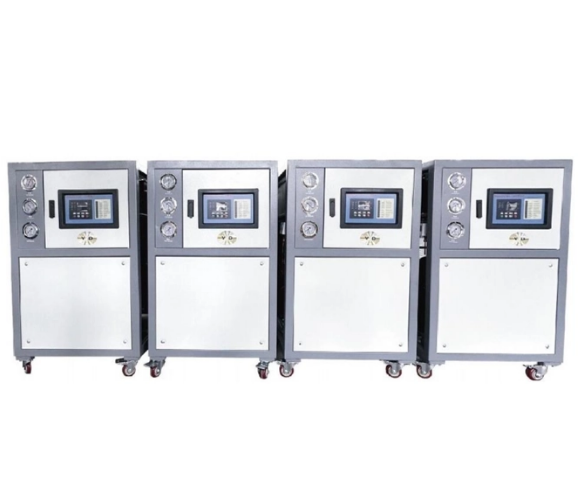
The core function of any water chiller is heat transfer. Any impediment to this process directly translates into wasted energy. Fouling, corrosion, and improper water chemistry are the primary enemies of efficiency. A strategic maintenance program focuses on keeping heat exchange surfaces pristine.
Fouling is the number one cause of efficiency loss in water-cooled chillers. It refers to the buildup of scale, slime, algae, and other deposits on the inside of condenser tubes. This layer acts as an insulator, forcing the compressor to work harder to reject heat. The impact is staggering: even a minuscule 0.01-inch layer of scale can increase a chiller's power consumption by 10%. Regular and effective tube cleaning is not just maintenance; it's a direct investment in lowering your utility bills.
The choice between mechanical and chemical cleaning depends on the system type and the severity of fouling. It's crucial to evaluate the right approach for your operational needs.
| Cleaning Method | Description | Best For | Frequency Guideline |
|---|---|---|---|
| Mechanical Cleaning | Uses brushes, scrapers, or high-pressure water to physically remove deposits from tube surfaces. | Removing heavy scale and biological fouling in accessible, straight tubes. | Annually for open-loop systems (cooling towers); as needed for closed-loop systems. |
| Chemical Cleaning | Circulates specialized chemicals (acids or alkalis) to dissolve scale and organic matter. | Complex systems with hard-to-reach areas or for removing specific types of mineral scale. | Every 3-5 years for well-maintained closed-loop systems, or when performance data indicates significant fouling. |
An effective water treatment program is the first line of defense against fouling and corrosion. This is especially critical for a stainless steel water chiller, where maintaining the protective passive layer on the steel's surface is essential. A comprehensive program includes:
Conductivity Testing: Monitors the level of dissolved solids to prevent scale formation. Automated bleed-off systems can maintain optimal levels.
pH Control: Keeps the water within a non-corrosive range.
Biocide Application: Prevents the growth of algae, slime, and bacteria that lead to biological fouling and microbiologically influenced corrosion (MIC).
Corrosion Inhibitors: Forms a protective film on metal surfaces, particularly important for mixed-metal systems.
For a stainless steel water chiller, it is crucial to avoid high chloride concentrations, which can cause pitting and stress corrosion cracking. The water treatment plan must be tailored to the specific materials in your system.
For facilities seeking to maximize uptime and efficiency, automated tube brushing systems offer a compelling ROI. These systems use small, captive brushes that are periodically flushed through the condenser tubes, preventing any deposit buildup from the start. While the initial investment is higher, the benefits are significant:
Consistent Peak Efficiency: The chiller operates as if its tubes were just cleaned, every day.
- **Reduced Downtime:** Eliminates the need for manual cleaning shutdowns. - **Fast Payback:** The energy savings often result in a payback period of around two years.
Beyond clean surfaces, the fluids moving through the chiller—water and refrigerant—must be managed with precision. Proper flow rates, refrigerant charge, and purity are non-negotiable for achieving peak performance.
The velocity of chilled water flowing through the evaporator tubes is critical. The industry standard, recommended by nearly every water chiller manufacturer, is to maintain a flow rate between 3 and 12 feet per second (FPS). This range is a careful balance:
Below 3 FPS: The flow becomes laminar (smooth and layered). This creates a stagnant boundary layer of water against the tube wall, drastically impeding heat transfer.
Above 12 FPS: The flow becomes excessively turbulent. While heat transfer is high, the velocity can cause vibration and erosion of the copper tubes over time, leading to premature failure.
Verifying flow rates with ultrasonic flow meters should be a part of any comprehensive chiller audit.
Air and moisture are the enemies of a sealed refrigerant circuit. These "non-condensables" get trapped in the condenser and do not liquefy at the operating pressure and temperature. They occupy valuable volume, effectively reducing the surface area available for heat transfer. This raises the condenser's head pressure, forcing the compressor to work harder and consume more energy. The presence of non-condensables can trigger a "7% efficiency penalty," meaning you pay 7% more on your energy bill for the same amount of cooling.
The amount of refrigerant in a water chiller is precisely calculated for optimal performance. Both too little and too much will degrade efficiency and potentially damage the compressor.
Under-charging: Insufficient refrigerant starves the evaporator, reducing its ability to absorb heat. This leads to longer run times and can cause the compressor to overheat.
- **Over-charging:** Excess refrigerant can back up into the condenser, raising head pressure. In a worst-case scenario, liquid refrigerant can return to the compressor, causing catastrophic damage.
Proper refrigerant levels are a cornerstone of efficiency, and leak detection should be a routine part of any maintenance check.
Think of the compressor's oil as its lifeblood. An annual spectrochemical oil analysis is like a blood test for your chiller. A sample is sent to a lab to be analyzed for contaminants that indicate underlying problems. This predictive tool can detect:
Moisture: Leads to the formation of corrosive acids.
Acidity: Breaks down motor winding insulation.
Metal Particles: Indicates bearing or gear wear, providing an early warning of impending mechanical failure.
This simple, low-cost test can help you avoid a multi-thousand-dollar compressor replacement.
While maintenance sustains efficiency, strategic upgrades can elevate it to new levels. For aging systems, retrofitting modern technology offers some of the highest returns on investment available in facility management. Most commercial applications see chillers operating at part-load for over 90% of their runtime, making technologies that optimize this performance particularly valuable.
Installing a Variable Frequency Drive (or Variable Speed Drive) on a chiller's compressor is often the single most effective energy-saving upgrade. A VSD allows the compressor motor to adjust its speed to precisely match the cooling load, rather than cycling on and off at full power. Since a chiller's energy use is not linear with its speed, the savings are dramatic, often reaching up to 20% annually.
The expansion valve controls the flow of refrigerant into the evaporator. Older systems use mechanical Thermal Expansion Valves (TXVs), which can be slow to react to changing conditions. Replacing a TXV with a modern Electronic Expansion Valve (EEV) provides much faster and more precise control. This allows the evaporator to run more efficiently, preventing issues like refrigerant floodback and delivering a potential efficiency gain of up to 14%.
This is a control strategy that saves energy by raising the chilled water supply temperature during periods of low humidity or low load. The "1-for-2 Rule" is a widely accepted guideline: for every 1°C you increase the supply water temperature, you can improve the chiller's efficiency by approximately 2%. This must be implemented carefully to ensure building humidity levels remain acceptable, but it can yield significant savings with no hardware cost.
For air-cooled chillers, the condenser fans are a major source of energy consumption. Upgrading standard AC fans to modern Electronically Commutated (EC) versions can reduce fan power consumption by as much as 6%. EC motors have built-in speed control and are inherently more efficient than their AC counterparts, especially at partial speeds.
| Upgrade | Typical Energy Savings | Primary Benefit | Best Suited For |
|---|---|---|---|
| Variable Speed Drive (VSD) | Up to 20% | Dramatically improves part-load efficiency. | Systems operating frequently below 80% load. |
| Electronic Expansion Valve (EEV) | Up to 14% | Precise refrigerant control and faster response. | Older chillers with mechanical TXVs. |
| Chilled Water Reset | 1-2% per 1°C increase | Low-cost control optimization. | Buildings with variable loads and humidity control flexibility. |
| EC Fan Retrofit | Up to 6% | Reduces auxiliary fan power consumption. | Air-cooled chillers with standard AC fan motors. |
Even the most advanced maintenance plan can fail without the right operational framework. Success depends on human diligence, a forward-thinking maintenance philosophy, and a commitment to continuous improvement.
A machine is only as good as its operator. Rigorous daily logging is the foundation of any successful maintenance program. Technicians should record key parameters like pressures, temperatures, and fluid levels at least four times daily. These logs create a performance baseline, making it easy to spot trends and anomalies. In fact, many a water chiller manufacturer will make warranty coverage contingent upon the availability of detailed and consistent operating logs.
The industry is shifting away from traditional, "calendar-based" preventative maintenance towards more intelligent, "condition-based" predictive maintenance. Instead of changing oil every 12 months, you change it when oil analysis indicates it's necessary. This transition is powered by technology:
IoT Sensors: Real-time monitoring of vibration, temperature, and power draw.
Vibration Analysis: Detects bearing wear and imbalance long before they become audible.
Data Analytics: Software platforms that use machine learning to predict failures based on operational data.
This approach minimizes unnecessary maintenance while maximizing the prevention of catastrophic failures.
Preparing a chiller for the high-demand summer season is a critical task that should not be left until the last minute. The "April Deadline" is a good rule of thumb for completing all pre-season checks. This includes:
Cooling Tower Disinfection: Cleaning and disinfecting the tower to prevent Legionella and ensure optimal heat rejection.
Gear-Box Oil Changes: Ensuring proper lubrication for fans and other moving parts.
- **Control System Verification:** Testing all sensors and actuators to ensure they are functioning correctly.
Your technical staff must be well-trained and up-to-date. This includes understanding the handling requirements of modern, low-GWP refrigerants and the specific needs of different equipment. For example, maintaining a stainless steel water chiller requires a different approach to water chemistry than a standard carbon steel unit to prevent specialized forms of corrosion. Continuous education ensures that best practices are followed and compliance with regulations is maintained.
The long-term performance of your chiller depends heavily on the support network behind it. When selecting a maintenance partner or purchasing new equipment, looking beyond the initial price tag is essential for securing the best long-term value.
Assess the long-term commitment of the manufacturer. A strong partnership provides several key advantages:
Parts Availability: Are proprietary parts readily available, or will you face long lead times for critical components?
Technical Expertise: Does the manufacturer offer access to factory-trained technicians who understand the intricate details of their equipment?
- **Documentation and Training:** Is comprehensive documentation and operator training provided?
The regulatory landscape for refrigerants is constantly evolving. The phase-out of high-GWP HFCs in favor of HFOs and other alternatives means that future-proofing is critical. Your maintenance plan and any new equipment purchases must align with local and federal environmental regulations. A good partner will help you navigate these transitions, ensuring your systems remain compliant for their entire operational life.
The most important shift in mindset is moving from focusing on the initial purchase price to analyzing the Total Cost of Ownership (TCO). A cheaper unit may have a lower efficiency rating, higher maintenance requirements, and a shorter lifespan, making it far more expensive over a 10-year period. A TCO analysis should include:
Initial Capital Cost
- Projected Annual Energy Costs - Scheduled Maintenance and Repair Costs - End-of-Life Replacement and Disposal Costs
This holistic view empowers you to make the smartest long-term financial decision for your facility.
Proactive water chiller maintenance is not a cost center; it is one of the highest-yield investments a facility manager can make. By moving beyond simple cleaning and embracing a data-driven, strategic approach, you can unlock significant savings in energy consumption, extend equipment life, and enhance operational uptime. The path forward begins with establishing a baseline. Start by commissioning a professional energy audit to identify your system's specific weaknesses. Simultaneously, implement a rigorous daily logging system. These two steps will quickly reveal the "low-hanging fruit" of efficiency gains, setting you on a course for sustained performance and optimized TCO.
A: It depends on the system type. For water-cooled chillers with open-loop cooling towers, annual mechanical cleaning is recommended due to higher exposure to airborne contaminants. For closed-loop systems, cleaning may only be needed every 3-5 years, guided by performance data. Air-cooled chiller coils should be inspected quarterly and cleaned when debris is visible.
A: The two most common causes are condenser tube fouling and improper refrigerant charge. Fouling acts as an insulator, forcing the compressor to work harder to reject heat. An incorrect refrigerant level—either too high or too low—disrupts the refrigeration cycle, reducing cooling capacity and increasing energy use.
A: Yes, in many cases. Most fixed-speed centrifugal and screw chillers are candidates for a VFD retrofit. A qualified technician must assess the compressor motor's condition and compatibility. The ROI is typically very high, with payback periods often under three years, especially for chillers that spend significant time at part-load.
A: Stainless steel relies on a thin, passive oxide layer for its corrosion resistance. Improper water chemistry, particularly high levels of chlorides, can break down this layer, leading to severe pitting corrosion and stress corrosion cracking. A tailored water treatment program is essential to maintain the correct pH and chemical balance to protect the material and ensure a long service life.
A: The ideal Delta T (temperature difference between supply and return water) is typically specified by the system designer, but a standard range is 10°F to 12°F (5.6°C to 6.7°C). Maintaining this range is crucial because it indicates the system is transferring heat effectively. A persistently low Delta T suggests inefficiencies in the building's distribution system, forcing the chiller to run inefficiently.


