


Views: 0 Author: Site Editor Publish Time: 2026-04-08 Origin: Site


In high-precision industrial, laboratory, and commercial environments, a water chiller is not just another piece of equipment; it is the heart of thermal management. It ensures that critical processes, from laser cutting to medical imaging, operate within strict temperature tolerances. However, its performance is directly tied to its internal and external cleanliness. Over time, the accumulation of mineral scale, algae, and debris acts as an insulator, drastically reducing efficiency, increasing energy consumption, and elevating the risk of costly downtime. This guide provides a comprehensive, professional framework for cleaning and maintaining your chiller. By following these standardized protocols, you can restore peak performance, extend the unit's lifespan, and ensure your operations run smoothly and efficiently.
Preventative ROI: Regular cleaning reduces energy costs by up to 15% and extends the lifespan of the water chiller machine.
Chemical Selection: Citric acid is generally preferred over vinegar to protect internal plastic components and seals.
Critical Technique: "Reverse flushing" is the most effective way to dislodge stubborn internal debris.
Safety First: Always isolate power and distinguish between distilled water and antifreeze-based systems before applying chemical agents.
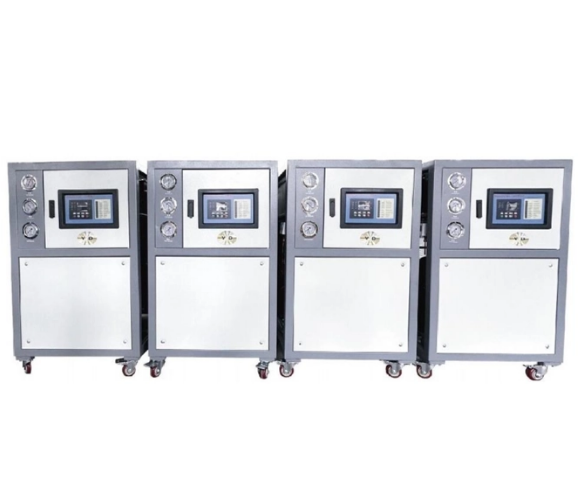
Viewing chiller cleaning as a recurring expense is a common but costly mistake. In reality, it is a high-return investment in operational stability and financial efficiency. Neglecting this fundamental task introduces significant risks and hidden costs that far outweigh the price of a maintenance plan.
The core function of a chiller is to transfer heat. This process relies on the unimpeded flow of coolant through heat exchangers and condenser coils. When mineral scale (like calcium carbonate) from hard water or biological growth (bio-fouling) coats these internal surfaces, it creates an insulating barrier. This layer forces the compressor—the most energy-intensive component—to work much harder and run longer to achieve the same cooling effect. A mere 1/16th of an inch of scale can increase energy consumption by over 10%, a cost that directly impacts your utility bills.
The TCO of a chiller extends beyond its initial purchase price. It includes energy, maintenance, repairs, and eventual replacement. Proactive cleaning dramatically lowers this TCO. Consider the comparison below:
| Maintenance Approach | Associated Costs | Long-Term Outcome |
|---|---|---|
| Preventative Cleaning (Annual) | Low cost of labor, cleaning agents, and minor parts (filters). | Maximized efficiency, lower energy bills, extended equipment life, predictable budget. |
| Reactive Repair (Breakdown) | High cost of emergency technician call-out, expensive component replacement (e.g., compressor, heat exchanger), and production downtime. | Unpredictable failures, compromised production schedules, premature equipment replacement. |
A dirty chiller is an unreliable chiller. As scale restricts flow and insulates surfaces, the refrigerant pressure can build to unsafe levels, triggering a "high-pressure trip." This safety feature shuts the system down to prevent catastrophic failure, but it also halts your production line or critical process. The resulting thermal instability can ruin product batches, compromise research data, or damage sensitive equipment connected to the cooling loop, leading to quality control failures and financial losses.
How do you know if your cleaning was successful? A truly "clean" system is defined by measurable improvements. Success is not just about a visually clean reservoir. Key performance indicators (KPIs) include:
Flow Rate Recovery: The coolant flow rate, measured in gallons or liters per minute, returns to the manufacturer's specified levels.
Temperature Delta Stability: The temperature difference (delta-T) between the water entering and leaving the chiller becomes stable and aligns with design specifications.
Reduced Compressor Load: The amperage draw of the compressor motor decreases, indicating it is no longer fighting against thermal insulation.
Proper preparation is the most critical phase of chiller maintenance. Rushing into the cleaning process without a thorough evaluation and strict adherence to safety protocols can cause equipment damage or, more importantly, personal injury. Always approach this task with a methodical, safety-first mindset.
Before you begin, you must understand the specific water chiller machine you are working on. Consult the owner's manual or technical data sheet. Key details to identify include:
Type: Is it an air-cooled or water-cooled model? An air-cooled chiller uses fans to dissipate heat from condenser coils into the ambient air, while a water-cooled model transfers heat to a separate water source, like a cooling tower. This determines which external components need cleaning.
Materials: Identify the materials used in the heat exchanger (e.g., copper, stainless steel, titanium) and plumbing (e.g., PVC, brass). This information is vital for choosing a compatible cleaning chemical.
Coolant: Determine if the system uses pure distilled water or a glycol-based antifreeze solution. This is a critical safety checkpoint.
Gathering all necessary items beforehand prevents delays and ensures you can complete the job safely and effectively.
Chemicals:
Descaling Agent: A 5% solution of citric acid is a widely recommended, effective, and relatively safe option for removing mineral scale. Avoid harsh acids unless specified by the manufacturer.
Biocide/Inhibitor: A broad-spectrum biocide prevents the regrowth of algae and bacteria. Corrosion inhibitors protect internal metal components.
Hardware:
External submersible pump (for creating a cleaning loop).
Two clean buckets (one for the cleaning solution, one for discharge).
Reinforced, flexible hoses compatible with the chiller's fittings.
pH test strips or a digital pH meter.
Safety Gear (PPE):
Safety goggles or a face shield.
Chemical-resistant gloves (nitrile or neoprene).
Appropriate work clothing to protect your skin.
This is a non-negotiable safety rule: Never introduce an acidic cleaning agent into a system containing glycol-based antifreeze. The chemical reaction can degrade the glycol, creating precipitates that can permanently clog the narrow passages of the heat exchanger. If your system uses antifreeze, you must first perform a complete flush with clean water to remove all traces of glycol *before* beginning the descaling process.
Before any physical work begins, the chiller must be completely de-energized. Follow standard Lock-out/Tag-out (LOTO) procedures. This involves turning off the main circuit breaker supplying power to the unit, applying a physical lock to the breaker switch, and attaching a tag that clearly states the equipment is undergoing maintenance and should not be operated. This procedure ensures that no one can accidentally restore power while you are working on the system, preventing severe electrical shock.
Cleaning the internal fluid circuit is the most intensive part of the maintenance process. It involves removing the old coolant, circulating a chemical descaler, and thoroughly rinsing the system to restore optimal heat transfer. Following this systematic protocol ensures all contaminants are removed safely.
First, safely drain all existing coolant from the chiller's reservoir and water lines into a suitable container. Once empty, connect a hose to the system's inlet and flush it with high-volume, clean water, directing the outlet to a drain. This initial flush will dislodge and remove any loose sediment, rust particles, or large biological debris, reducing the workload for the chemical cleaning agent.
This step uses an external pump to create a closed loop for circulating the cleaning solution.
Setup: Place an external submersible pump inside a bucket filled with your prepared 5% citric acid solution. Connect the pump's outlet hose to the chiller's inlet port. Run a separate hose from the chiller's outlet port back into the bucket. This creates a continuous circuit.
Circulation: Turn on the external pump and let the solution circulate through the chiller for 30 to 60 minutes. The duration depends on the severity of the scale buildup. You may see the solution change color or notice foaming as the acid reacts with the mineral deposits.
For systems with stubborn blockages, reverse flushing is a highly effective professional technique. After the initial chemical circulation, switch the hose connections: connect the pump's outlet to the chiller's outlet port and run the return hose from the inlet port back to the bucket. By reversing the direction of flow, you create turbulence that can dislodge debris trapped in "dead zones" or sharp bends within the heat exchanger that a standard forward flow might miss.
After descaling, it is crucial to remove every trace of the acidic cleaning solution to prevent corrosion. Drain the citric acid solution and perform multiple rinses with clean, distilled water. After each rinse, use a pH test strip or meter to check the discharge water. Continue flushing until the pH of the water coming out of the system is neutral (approximately 7.0). This confirms that no residual acid remains.
The final step is to protect the newly cleaned system from immediate re-contamination. Before refilling the chiller with its final coolant, circulate a solution containing a biocide or an inhibitor package according to the product's instructions. This treatment coats the internal surfaces and creates an environment hostile to the regrowth of algae, slime, and bacteria, extending the time until the next cleaning is required and helping you maintain an efficient water chiller.
While the internal circuit is critical, the external components are equally important for overall system health. Dust, dirt, and debris on condenser coils and clogged filters can restrict airflow, leading to the same types of high-pressure faults and inefficiency caused by internal scale. This part of the maintenance is often simpler but should never be overlooked.
For air-cooled chillers, the condenser fins are the primary point of heat rejection to the atmosphere. When they become clogged with dust and debris, the unit cannot cool itself effectively.
Best Practice: Use a soft-bristled brush to gently loosen dirt from the fins, always brushing in the same direction as the fins to avoid bending them. Follow up with a low-pressure stream of compressed air or a vacuum with a brush attachment to remove the dislodged debris.
Common Mistake: Never use a high-pressure washer. The force can easily bend the delicate aluminum fins, which severely restricts airflow and permanently damages the condenser coil.
Most chillers have at least one particulate filter in the water line and often an air filter covering the condenser. These are your first line of defense against contaminants. Regularly inspect these filters. Some mesh water filters can be removed, rinsed, and reused. However, most air filters and fine particulate water filters are disposable. Trying to clean a clogged paper or fabric filter is often ineffective. To maintain an efficient performance, replace them according to the schedule recommended by the water chiller manufacturer or whenever they appear visibly dirty.
While the system is powered down for cleaning, take the opportunity to perform a quick mechanical check.
Fans: Ensure condenser fan blades are clean and spin freely without obstruction or excessive noise.
Motors: Some older fan motors may have ports for lubrication. Check the manufacturer's guide to see if periodic lubrication is required.
Enclosure: Wipe down the unit's housing and ensure all ventilation ports are clear of obstructions. A clean exterior often reflects a well-maintained interior.
After a thorough cleaning, it's wise to check the refrigerant circuit. Many chillers have a "sight glass" in the liquid line of the refrigerant circuit. When the system is running under a stable load, this glass should show a clear, solid stream of liquid refrigerant. If you see persistent bubbles or foam, it can indicate a potential refrigerant leak or a low refrigerant charge. This is a sign that the system requires service from a certified HVAC technician, as cleaning alone will not solve this problem.
Deciding whether to perform chiller maintenance in-house or hire a professional service provider is a critical decision. It depends on the complexity of your equipment, the skills of your team, and your tolerance for risk. Using a clear evaluation framework can help you make the right choice for your facility.
The size and number of chillers are primary factors. A single, small laboratory chiller is a manageable DIY task for a trained technician. However, a large industrial facility with multiple, interconnected central chillers presents a much greater challenge. Professional services are better equipped to handle the logistics of cleaning large-volume systems, managing significant quantities of chemicals, and ensuring the entire cooling loop is properly treated and balanced.
Many equipment warranties are contingent upon maintaining a detailed service log that proves the unit has been maintained according to the manufacturer's specifications. Professional service companies provide certified documentation of all work performed, which can be invaluable for preserving your warranty. They are also knowledgeable about local environmental regulations for disposing of used coolant and cleaning chemicals, ensuring your facility remains compliant.
Experience plays a huge role in identifying potential problems. One significant risk in older systems is "irreversible fouling." Over years of operation, corrosion may have thinned the walls of copper tubing. The scale buildup might be the only thing preventing a pinhole leak. An aggressive chemical cleaning can dissolve this scale, exposing the weak point and causing a leak that requires expensive repairs. An experienced professional can often assess this risk beforehand and choose a less aggressive cleaning method or recommend replacement.
| Factor | Favorable for DIY | Favorable for Professional Service |
|---|---|---|
| System Size/Complexity | Single, small-to-medium standalone unit. | Multiple units, large central systems, complex piping. |
| In-House Expertise | Staff trained in mechanical and chemical handling procedures. | Limited or no trained maintenance staff available. |
| Warranty/Compliance | Equipment is out of warranty; simple documentation is sufficient. | Equipment is under warranty; certified service logs are required. |
| Equipment Age/Condition | Newer unit with a known history of using good quality water. | Older unit with unknown history or signs of heavy corrosion. |
Regardless of who performs the work, the final step is to establish a proactive maintenance schedule. For chillers operating in clean, climate-controlled environments, an annual cleaning may be sufficient. For units in dusty industrial settings or those running at high load 24/7, a 6-month inspection and cleaning cycle is a much safer bet. Mark it on a calendar and treat it as an essential operational task.
A clean water chiller is a reliable and efficient one. The direct impact of regular maintenance on energy costs, operational uptime, and equipment longevity is undeniable. By transforming cleaning from a reactive chore into a proactive strategy, you protect a critical asset and bolster your bottom line. The most powerful long-term strategy is to minimize the need for aggressive cleaning in the first place. Prioritizing the use of high-quality distilled or deionized water, combined with a proper corrosion and biological inhibitor, will significantly reduce the rate of scale and bio-fouling. For any specific procedures, always consult your water chiller manufacturer to obtain detailed chemical compatibility charts and torque specifications for fittings, ensuring your maintenance efforts are both effective and safe.
A: For standard environments like labs or offices, an annual cleaning is typically sufficient. In high-load industrial settings with poor air quality or hard water sources, a semi-annual (every 6 months) cleaning is recommended. Monitor performance; if you notice a gradual increase in temperature or energy use, it may be time for a cleaning, regardless of the schedule.
A: It is strongly discouraged. While bleach (sodium hypochlorite) is an effective biocide, it is highly corrosive to many metals, especially stainless steel and aluminum, commonly found in heat exchangers. Using bleach can cause pitting corrosion, leading to premature failure and leaks. Always opt for a manufacturer-approved biocide designed for closed-loop cooling systems.
A: If a thorough cleaning does not restore performance, the issue may lie elsewhere. Common culprits include a low refrigerant charge due to a leak, a failing compressor, or a persistent internal obstruction that chemical cleaning could not remove. Check the refrigerant sight glass for bubbles and listen for unusual compressor noises. These symptoms warrant a call to a certified HVAC technician for diagnosis.
A: Yes, citric acid is generally preferred. While both are mild acids, vinegar (acetic acid) can be more aggressive toward certain plastics, rubber seals, and O-rings over time, causing them to become brittle. Citric acid is highly effective at dissolving mineral scale (calcium carbonate) while being more compatible with the variety of materials found in a modern water chiller. It is considered the industry standard for safe, effective descaling.


