


Views: 0 Author: Site Editor Publish Time: 2026-04-06 Origin: Site


In countless industrial and commercial settings, a water chiller serves as the heart of thermal management. It's more than just a cooling device; it's a factory-packaged solution engineered for precision, reliability, and efficiency. The demand has evolved far beyond simple temperature control. Today, industries require mission-critical systems that can maintain exact temperatures to protect sensitive equipment, ensure product quality, and maximize process yields. Understanding how these powerful machines operate is no longer just for engineers. For facility managers and business owners, this knowledge is fundamental to optimizing the Total Cost of Ownership (TCO), enhancing operational uptime, and making informed investment decisions. This guide will demystify the mechanics of a water chiller, exploring its core principles, key components, and the criteria for selecting the right system for your needs.
Core Mechanism: Chillers operate on the vapor-compression or absorption cycle to transfer heat from a process load to the environment.
Efficiency Drivers: Variable Frequency Drives (VFDs) and Electronic Expansion Valves (EEVs) are critical for modern energy ROI.
Selection Logic: Choosing between air-cooled and water-cooled systems depends on water availability, space, and scale.
Risk Mitigation: Proactive monitoring of pressure, flow, and water chemistry prevents the most common causes of failure (corrosion and scaling).
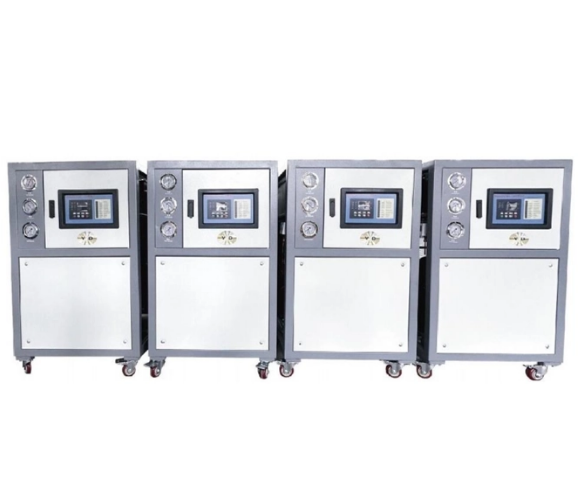
At its core, a water chiller moves heat from one place to another. It uses a refrigeration cycle to cool a fluid, typically water or a water-glycol mix, which is then circulated through a process to absorb heat. This process leverages fundamental principles of thermodynamics to achieve consistent and reliable cooling, even for the most demanding applications.
The vast majority of modern chillers rely on the vapor-compression refrigeration cycle. This process is a continuous loop involving a refrigerant that changes state from liquid to gas and back again. It consists of four primary components working in harmony:
Evaporator: This is where the cooling happens. Chilled water from your industrial process flows through the evaporator. Inside, a low-pressure liquid refrigerant absorbs heat from this process water. The heat transfer causes the refrigerant to boil and turn into a low-pressure gas, while the process water becomes colder and is pumped back to do its job.
Compressor: Often called the "heart" of the system, the compressor draws in the low-pressure refrigerant gas from the evaporator. It then mechanically compresses this gas, significantly increasing its pressure and temperature. Common compressor types include Scroll, Screw, and Centrifugal, each suited for different capacity ranges.
Condenser: The high-pressure, high-temperature refrigerant gas now moves into the condenser. Here, it releases the heat it absorbed from the process water into the surrounding environment. As the heat is rejected, the refrigerant condenses back into a high-pressure liquid. This heat rejection is handled either by ambient air (in an air-cooled chiller) or a separate water loop connected to a cooling tower (in a water-cooled chiller).
Expansion Valve: The high-pressure liquid refrigerant flows from the condenser through the expansion valve. This component creates a pressure drop, causing the refrigerant's temperature to fall dramatically as it expands. The resulting cold, low-pressure liquid-vapor mix then enters the evaporator, and the cycle begins anew.
The entire operation hinges on the Second Law of Thermodynamics, which states that heat naturally flows from a warmer area to a cooler one. A chiller cleverly uses the phase change of a refrigerant to manipulate this law. By lowering the refrigerant's boiling point in the evaporator (through low pressure), it can absorb heat from already cool process water. By raising its condensation point in the condenser (through high pressure), it can reject that same heat to warm ambient air. This ability to move heat against its natural gradient is what makes mechanical refrigeration possible.
Most industrial applications use a closed-loop system where the water chiller machine circulates the same fluid continuously. This is highly beneficial as it maintains the integrity of the cooling fluid, preventing contamination from airborne particles, minerals, or other debris. An open-loop system, by contrast, might use a tank or sump open to the atmosphere. While simpler, it exposes the system to potential contamination, which can lead to fouling, corrosion, and reduced efficiency over time. For precision applications, a closed-loop design is almost always the superior choice.
Not all chillers are created equal. The right choice depends on your specific cooling load, environmental conditions, and operational goals. The primary distinction is how the chiller rejects heat: using either air or water.
Air-cooled chillers use ambient air to dissipate the heat absorbed from the process. They are equipped with condenser coils and fans that blow air across them, carrying the heat away. This self-contained design makes them a popular choice for many facilities.
Pros: They generally have a lower upfront installation cost because they do not require a cooling tower, condenser water pumps, or extensive piping. Maintenance is also simpler, often limited to periodic cleaning of the condenser coils.
Best for: Air-cooled units are ideal for facilities with smaller footprints, those in water-scarce regions, or where outdoor installation is feasible. They are common in commercial buildings, light manufacturing, and wineries.
Water-cooled chillers reject heat to a separate water source, which is then pumped to a cooling tower where the heat is ultimately released into the atmosphere through evaporation. While more complex, this method is significantly more efficient.
Pros: Their primary advantage is superior energy efficiency, measured by metrics like the Energy Efficiency Ratio (EER) or Kilowatts per Ton (kW/Ton). They typically have a longer operational lifespan and can be built to handle much larger cooling capacities.
Best for: These systems are the standard for large-scale industrial plants, data centers, hospitals, and any facility with a high, continuous cooling demand and access to a reliable water source.
| Feature | Air-Cooled Chiller | Water-Cooled Chiller |
|---|---|---|
| Energy Efficiency | Lower (Efficiency decreases as ambient air temperature rises) | Higher (More stable performance, less affected by air temperature) |
| Installation Cost | Lower (No cooling tower or extra pumps needed) | Higher (Requires cooling tower, pumps, and complex piping) |
| Footprint | Larger chiller unit, but no separate tower | Smaller chiller unit, but requires space for a cooling tower |
| Maintenance | Simpler (Mainly condenser coil cleaning) | More complex (Includes cooling tower maintenance and water treatment) |
| Water Consumption | None (aside from occasional cleaning) | Significant (due to evaporation in the cooling tower) |
Beyond the air vs. water debate, certain applications demand specialized technologies:
Glycol Chillers: When process temperatures need to drop below freezing (0°C or 32°F), water is no longer a viable coolant. These chillers use a mixture of water and ethylene or propylene glycol as an antifreeze. They are essential in food processing, breweries, dairies, and pharmaceutical manufacturing.
Absorption Chillers: These unique machines use a heat source—such as waste steam, hot water, or direct-fired natural gas—instead of electricity to drive the refrigeration cycle. While their electrical consumption is minimal, they are best suited for facilities with an abundant and cheap source of waste heat, making them a key technology for combined heat and power (CHP) plants and decarbonization projects.
Selecting the right water chiller manufacturer involves looking beyond the spec sheet. You are investing in a long-term partnership, and the quality of both the product and the support is paramount.
Cooling capacity is often discussed in "tons of refrigeration," but this can be a misleading metric. A more precise measure is British Thermal Units per hour (BTU/hr), which represents the actual amount of heat the chiller must remove. It's crucial to calculate your peak load accurately, including a safety margin for future expansion or extreme weather conditions. A reputable manufacturer will help you move beyond simple tonnage to a detailed thermal load analysis.
The regulatory landscape for refrigerants is constantly evolving to address environmental concerns. Older refrigerants with high Global Warming Potential (GWP) are being phased out globally. Partnering with a manufacturer that has already transitioned to low-GWP refrigerants like R-454B or R-32 ensures your investment is future-proof and compliant with environmental regulations for years to come. This avoids the risk of costly retrofits or obsolete equipment.
A chiller is only as reliable as its weakest component. When evaluating a unit, pay close attention to the details:
Compressor Brand: Look for industry-leading brands known for their durability and efficiency, such as Danfoss, Copeland, or Bitzer.
Heat Exchanger Materials: Copper is a common material, but for applications involving corrosive fluids or requiring high purity, stainless steel or titanium heat exchangers may be necessary.
Integrated Systems: Check the quality of the integrated pump, controls, and electrical switchgear. A well-designed system will have all components working seamlessly together.
Your relationship with the manufacturer doesn't end at purchase. Before committing, evaluate their post-sales support infrastructure. Key questions to ask include: What are the typical lead times for new units? How readily available are spare parts? Do they have local, factory-trained technicians for commissioning and troubleshooting? Strong support can mean the difference between a minor hiccup and a prolonged, costly shutdown.
A modern industrial water chiller is a significant capital investment, but its largest expense is often the energy it consumes over its lifetime. Focusing on efficiency and intelligent operation is key to maximizing your return on investment (ROI).
Most industrial processes do not run at 100% load all the time. A Variable Frequency Drive (VFD), also known as an inverter, allows the chiller's compressor to adjust its speed to precisely match the cooling demand. By slowing down during part-load conditions, a VFD can reduce energy consumption by up to 30% or more compared to a traditional fixed-speed chiller. This technology offers one of the most significant opportunities for energy savings.
The integration of sensors and connectivity has transformed chiller management from a reactive to a proactive process. Key monitoring tools include:
BTU Meters: These devices measure the flow rate and temperature difference of the chilled water, allowing you to track the actual cooling output versus the energy consumed. This provides real-time efficiency data.
Pressure & Flow Sensors: By monitoring the system's vital signs, these sensors can identify developing issues like refrigerant leaks, pump inefficiencies, or clogged filters long before they cause a critical failure and unplanned downtime.
As businesses face increasing pressure to reduce their carbon footprint, chiller technology is evolving. Advanced control systems using Model Predictive Control (MPC) can optimize chiller performance based on weather forecasts and utility rate schedules. Furthermore, many modern chillers offer heat recovery options. Instead of rejecting process heat to the atmosphere, it can be captured and repurposed for facility heating, domestic hot water, or other processes, turning a waste stream into a valuable asset.
Even the best chiller can fail if not properly installed, operated, and maintained. Understanding the most common failure modes is the first step toward mitigating risk and ensuring a long, productive service life.
This is arguably the number one enemy of a water chiller system, particularly water-cooled units. If the water circulating through the system is not properly treated, minerals can precipitate out and form scale on heat exchanger surfaces. This insulating layer drastically reduces heat transfer efficiency, forcing the compressor to work harder and consume more energy. Similarly, improper water chemistry can lead to corrosion, which can cause leaks and catastrophic failure of the heat exchanger tubes.
The compressor motor is the single most expensive component in a chiller. It is highly vulnerable to electrical issues. Voltage surges, sags, phase imbalances, or even simple loose wiring can cause motor windings to overheat and burn out, leading to a costly and time-consuming repair. Installing proper electrical protection and conducting regular inspections of electrical connections are critical preventive measures.
Proactive maintenance is non-negotiable for optimal performance and longevity. The specific tasks depend on the chiller type:
Air-Cooled Units: The condenser coils must be cleaned regularly. Dust, pollen, and other airborne debris can clog the fins, restricting airflow and forcing the system to run at higher pressures, which reduces efficiency and stresses the compressor.
-
The cooling tower requires a rigorous maintenance and water treatment program. This not only prevents scaling and corrosion but is also a critical public health measure to prevent the growth of harmful bacteria like Legionella.
Some industrial processes have unique cooling demands that can overwhelm a standard chiller. For example, plastic injection molding requires a very rapid "pull-down" rate to cool the mold between cycles. A chiller not specifically sized and configured for this high-transient load will struggle to keep up, leading to longer cycle times and lower production output. It is vital to ensure your chiller is designed for the specific demands of your application.
Selecting the ideal industrial water chiller is a systematic process. Following these steps will help you make a well-informed decision that balances performance, cost, and long-term reliability.
First, you must accurately calculate the total amount of heat your process generates. This involves identifying all heat sources, determining their output in BTU/hr, and summing them up. It is best practice to add a safety margin of 10-20% to account for unexpected variables and potential future growth. This is the single most important piece of data in the selection process.
Next, assess the installation environment. Consider the highest expected ambient temperatures, as this directly impacts the performance of air-cooled chillers. Analyze the quality and availability of water if you are considering a water-cooled system. Other factors include space limitations, noise sensitivity (especially for installations near offices or residential areas), and the electrical service available.
Do not select a chiller based on the initial purchase price alone. A proper Total Cost of Ownership (TCO) analysis projects costs over a 10- to 15-year period. This includes the upfront capital cost, installation expenses, and, most importantly, the projected annual energy and maintenance costs. A more expensive, high-efficiency unit often has a lower TCO due to significant energy savings over its lifespan.
Finally, vet your potential suppliers. Look for a water chiller manufacturer with a proven track record and specific experience in your industry, whether it's medical imaging, food and beverage, or heavy manufacturing. Ask for case studies and customer references. A vendor who understands the nuances of your application can provide invaluable guidance and ensure the system is perfectly matched to your needs.
The water chiller is a critical utility, an indispensable engine of productivity for modern industry. Its operation, based on the elegant principles of the vapor-compression cycle, enables everything from creating life-saving pharmaceuticals to manufacturing everyday consumer goods. Making the right choice requires moving beyond the initial price tag and focusing on long-term value. A system selected for its energy efficiency, robust components, and the support of a knowledgeable manufacturer will deliver reliable performance and a superior return on investment for years. To ensure your selection is perfectly aligned with your operational needs, the best next step is to consult with a qualified thermal engineer to perform a site-specific load calculation and system design.
A: The primary difference is what they cool. A standard air conditioning (AC) unit cools air directly using an evaporator coil placed in the airstream. A water chiller cools a liquid (usually water or a water-glycol mix), which is then pumped to another location to cool air or process equipment. Chillers are used for large-scale commercial and industrial applications, while AC units are typically for smaller residential or light commercial spaces.
A: With proper, proactive maintenance, a well-built industrial water chiller can have a service life of 15 to 25 years. The lifespan depends heavily on factors like operating hours, maintenance quality, water treatment (for water-cooled units), and the operational environment. Key components like compressors may require replacement or rebuilding during this period.
A: The most common causes of efficiency loss are fouled heat exchangers (due to scale, algae, or debris) and an incorrect refrigerant charge (either too low or too high). Dirty condenser coils on an air-cooled unit or a poorly maintained cooling tower on a water-cooled unit will also severely impact performance. Regular maintenance is the key to preventing these issues.
A: Yes, but you need a specific type of chiller. Standard industrial chillers are often not designed to reach the near-freezing temperatures (e.g., 3°C or 37°F) desired for cold plunges. You need a chiller rated for low-temperature operation. Additionally, it's crucial to have a model with an integrated pump and a filtration system (like a 20-micron filter) to maintain water clarity and hygiene.
A: Sizing a chiller requires a detailed heat load calculation, but a basic formula can provide a rough estimate. The formula is: Cooling Capacity (in BTU/hr) = Flow Rate (Gallons per Minute) x 8.33 (Weight of water per gallon) x 60 (Minutes per hour) x Specific Heat (1 for water) x Delta T (Temperature difference in °F between inlet and outlet water). Always consult an expert for precise sizing.


