


Views: 0 Author: Site Editor Publish Time: 2026-04-22 Origin: Site


Global environmental policies are rapidly changing the insulation manufacturing landscape. Strict frameworks like the Kigali Amendment force the mandatory phase-out of traditional HCFC and HFC blowing agents. This global shift puts plant managers and investors in a difficult, time-sensitive position. They must choose between upgrading to a modern CO2 foam XPS production line or stretching the remaining lifespan of aging, lower-CAPEX legacy systems. Delaying this transition risks heavy compliance fines, shrinking margins, and lost market share.
This article delivers an evidence-based comparison of these two distinct manufacturing paths. We objectively evaluate the technical realities, the total cost of ownership (TCO), and the specific implementation risks involved. You will learn exactly what drives the return on investment when abandoning traditional extrusion methods for advanced CO2 technologies. We aim to guide your next capital equipment investment securely and profitably.
Compliance vs. CAPEX: Traditional methods offer lower initial equipment costs but carry severe long-term regulatory and phase-out risks. CO2 lines require higher upfront investment but eliminate carbon tax liabilities.
Operational Economics: CO2 gas is significantly cheaper than fluorocarbon-based blowing agents, shifting the TCO advantage to CO2 over a 3-to-5-year production horizon.
Process Complexity: Transitioning to CO2 is not a simple swap; it requires specialized twin-screw extrusion, high-pressure metering pumps, and stricter operator training to maintain cell structure and board density.
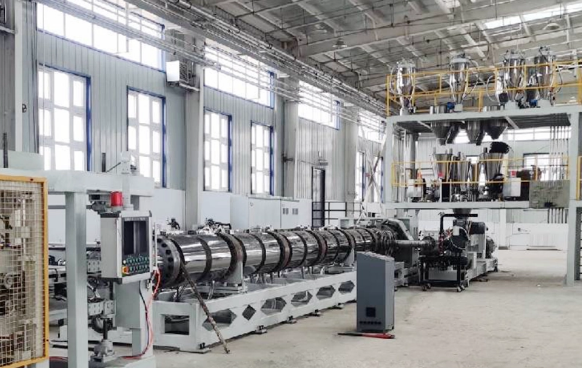
For decades, the insulation sector relied heavily on Freon and HCFCs. These traditional blowing agents provided straightforward processing dynamics. They offered forgiving temperature controls and excellent baseline thermal resistance. Manufacturers grew highly comfortable operating these legacy systems. Maintenance was predictable, and the raw materials were historically cheap.
However, severe market disruption is already here. Approaching legislative bans heavily target legacy blowing agents due to their environmental impact. HCFCs carry Global Warming Potentials (GWP) often in the thousands. Rising chemical taxes and strict supply quotas rapidly erode profit margins. Manufacturers using a standard XPS production line face escalating, unpredictable operational costs. Continuing the traditional approach is no longer a viable long-term strategy. You simply cannot ignore the changing regulatory climate.
To successfully upgrade, a replacement system must meet strict success criteria. It must achieve zero Ozone Depletion Potential (ODP). It also needs a deeply reduced GWP, ideally close to 1. At the same time, the final product must maintain required compressive strength. The thermal R-value of the final XPS board must remain highly competitive for building envelopes. Finding this delicate balance drives the modern equipment market.
Extruding polystyrene foam using carbon dioxide demands entirely different mechanical architectures. You cannot simply inject CO2 into an older, low-pressure barrel. The physics of supercritical CO2 require robust, high-pressure engineering to prevent gas escape and material degradation.
Traditional systems typically use standard single or basic twin-screw setups. These machines handle low-pressure fluorocarbons easily without complex sealing mechanisms. CO2 systems, however, operate under immense internal pressure. They require specialized co-rotating twin-screw primary extruders. This advanced screw design deeply shears the polymer and manages the rapid expansion of supercritical CO2. Without this high-shear environment, the gas separates from the melt prematurely.
Traditional lines rely on simple, low-pressure gravity or gear pump injection systems. In sharp contrast, modern CO2 lines require absolute precision. They depend on highly accurate CO2, Ethanol, and Nitrogen metering pumps. These pumps must inject blowing agents at exact mass flow rates. Any fluctuation in the delivery rate causes catastrophic board collapse or severe surface corrugation.
Carbon dioxide acts as a very strong plasticizer. It dramatically lowers the melt viscosity of the polystyrene matrix. Therefore, CO2 systems demand advanced static mixers and prolonged cooling zones. The melt temperature must drop precisely before reaching the die head. Rapid, controlled cooling prevents board warping. It also ensures a uniform, closed-cell structure essential for water resistance.
System Component | Traditional Extrusion Methods | Modern CO2 Extrusion Line |
|---|---|---|
Extruder Screw Design | Single or basic twin-screw, low shear profiling | Specialized co-rotating twin-screw, high shear mixing |
Fluid Injection Method | Low-pressure gear pumps | High-pressure, precision mass-flow metering pumps |
Temperature Control | Standard barrel water/oil cooling | Advanced static mixers and extended tandem cooling units |
Operating Pressure | Low to moderate (easy sealing) | Extremely high (demands robust mechanical seals) |
Many plant managers initially worry about the quality of CO2-blown boards. Early iterations of this technology did struggle with stability. Today, modern engineering resolves these historical flaws completely.
A persistent historical myth claims CO2-blown boards are inherently brittle. Early systems lacked proper temperature profiling, leading to large, weak cells. Today, modern dynamic cooling mitigates this internal stress. Tandem extruders carefully manage the melt temperature just before the die head. This precise control creates a tight, microcellular structure. The resulting board density easily matches or exceeds traditional boards.
We must compare both initial and aged thermal resistance to get a true picture. Traditional gases hold better initially because they stay trapped inside the foam cells longer. However, CO2 boards offer highly stable, predictable long-term insulation performance. Fluorocarbons eventually diffuse out of traditional boards, causing a sudden drop in R-value over the years. CO2 establishes its thermal baseline quickly and maintains it reliably for decades.
Heavy-load construction applications require massive compressive strength. Transitioning to a CO2 XPS foam board production line requires specific formulation tweaks to maintain this strength.
Nucleating Agents: Operators must increase the usage of talc or specially designed nucleating powders. This creates more cell-forming sites, leading to smaller, stronger cells.
Flame Retardants: CO2 changes the melt flow index significantly. You must select flame retardants highly compatible with higher extrusion pressures to prevent degradation.
Co-blowing Agents: Adding minimal amounts of ethanol helps control expansion rates at the die lip. This strategy prevents surface cracking and heavily boosts internal core strength.
Financial justification requires looking far beyond the initial sticker price. The total cost of ownership (TCO) heavily favors sustainable methods over a standard production lifecycle.
A high-pressure CO2 line undeniably carries a premium upfront cost. Buyers pay for advanced tandem machinery, specialized die heads, and critical atmospheric safety sensors. Legacy equipment is cheaper to purchase and install initially. However, relying on this lower CAPEX acts as a dangerous financial trap moving forward.
The true financial advantage of CO2 becomes apparent during daily operations.
Material Savings: Bulk industrial carbon dioxide is incredibly cheap and widely available. Synthetic blowing agents face heavy environmental taxes and shrinking supply quotas. The cost reduction in daily material consumption is steep and immediate.
Energy Consumption: Heavy-duty cooling naturally draws more electrical power. CO2 systems require larger, more robust chilling units. While overall energy costs rise slightly, the massive chemical material savings easily offset this power draw.
You must calculate the financial impact of avoiding future regulatory fines. Global governments aggressively penalize unapproved HFC usage. Furthermore, CO2-blown boards capture lucrative green-building market premiums. Supplying strict LEED-certified projects opens entirely new, high-margin sales channels for your business.
Financial Cost Factor | Legacy HCFC Systems | Modern CO2 Systems |
|---|---|---|
Initial Equipment CAPEX | Low | High |
Daily Blowing Agent OPEX | Extremely High (Taxes applied) | Very Low (Commodity pricing) |
Compliance Fines Risk | High & Increasing annually | Zero Risk |
Overall 5-Year TCO | Increasing exponentially | Stabilized and significantly lower |
Moving to a new production technology involves unavoidable friction. How you manage this friction determines your ultimate market success.
Can you simply upgrade an existing machine to handle CO2? Analyzing the specific engineering constraints reveals a harsh truth. Retrofitting high-pressure metering pumps and complex screw profiles onto legacy barrels rarely works. Older barrels lack the necessary thick-walled pressure ratings. This creates a severe risk of material leakage at the flanges. It also guarantees inconsistent foaming. A full, turnkey replacement usually costs less than endless retrofit troubleshooting.
Time-to-market considerations matter deeply to investors. Installing a brand new, turnkey CO2 line offers highly predictable timelines. Conversely, overhauling existing machinery leads to open-ended, frustrating downtime. Transparent factory acceptance testing for a new line ensures commercial production starts immediately upon facility installation.
Never underestimate the steep operational learning curve. Operators must transition from highly forgiving, analog legacy systems. They enter highly sensitive, parameter-driven CO2 environments controlled by advanced PLCs.
Common Mistake: Failing to retrain staff adequately. CO2 requires monitoring precise thermal profiles continuously. A temperature variance of just two degrees Celsius can ruin an entire production run. Invest heavily in operator education.
Selecting the right machinery partner ensures long-term profitability. Follow a structured, logical approach when upgrading.
First, explicitly match machine output specifications (measured in kg/h) with your regional demand. Global demand for green insulation is growing rapidly. Do not under-size your new extruder to save money. Always plan for at least a 20% capacity increase over the next three years to capture market growth.
Prioritize manufacturers who prove specific engineering capabilities. They must offer proven CO2 metering integration natively. Look for vendors providing localized technical support and rapid spare parts delivery. Thorough, transparent Factory Acceptance Testing (FAT) protocols are non-negotiable before finalizing final payments.
Conduct a site-specific TCO audit immediately. Compare the projected 5-year cost of maintaining your traditional lines against financing a new CO2-based infrastructure. Be sure to include upcoming carbon taxes and expected synthetic gas price hikes in your financial audit.
Clinging to traditional extrusion methods acts merely as a short-term cash flow preservation strategy. Ultimately, it leads to a definitive dead end. Investing in a CO2 foam XPS production line represents a necessary, highly profitable evolution. It ensures survival and dominance in the modern construction materials market.
Audit your TCO now: Calculate your current blowing agent expenses over a strict 5-year window.
Evaluate your facility: Ensure your plant has adequate floor space and electrical power for heavy-duty tandem extruders.
Focus on training: Prepare your engineering team for a highly sensitive, data-driven production process.
Plan your timeline: Base your transition on local regulatory enforcement dates. Always factor in the 6–12 month lead time for commissioning a high-precision CO2 line.
A: Generally, no. Older traditional lines lack the necessary high-pressure barrel ratings. They also do not have the required length-to-diameter ratios for proper CO2 mixing. Attempting to retrofit metering pumps onto legacy barrels causes severe gas leakage and inconsistent cell structures. Purchasing a new, purpose-built CO2 system is ultimately more reliable and cost-effective.
A: The operational expense gap is massive. Bulk CO2 costs only a tiny fraction per kilogram compared to heavily taxed synthetic fluorocarbons. Even though CO2 machines draw slightly more power for intense cooling, the extreme material savings accelerate your return on investment. The OPEX savings often pay for the machine premium within three years.
A: Early CO2 systems struggled to produce thick boards over 100mm without surface defects. However, modern tandem extrusion configurations entirely solve this limitation. By utilizing advanced static mixers and optimized co-blowing formulas, modern CO2 lines easily produce premium boards up to 150mm thick with perfect density.
A: Running supercritical CO2 requires strict safety protocols. Facilities must install high-pressure gas storage tanks safely outside the main production floor. The factory needs advanced ventilation systems to prevent gas buildup. Furthermore, the extrusion line must feature automated pressure-relief valves and continuous atmospheric monitoring sensors to ensure full standard compliance.


